Categories
Blog Gutter Guard Installation

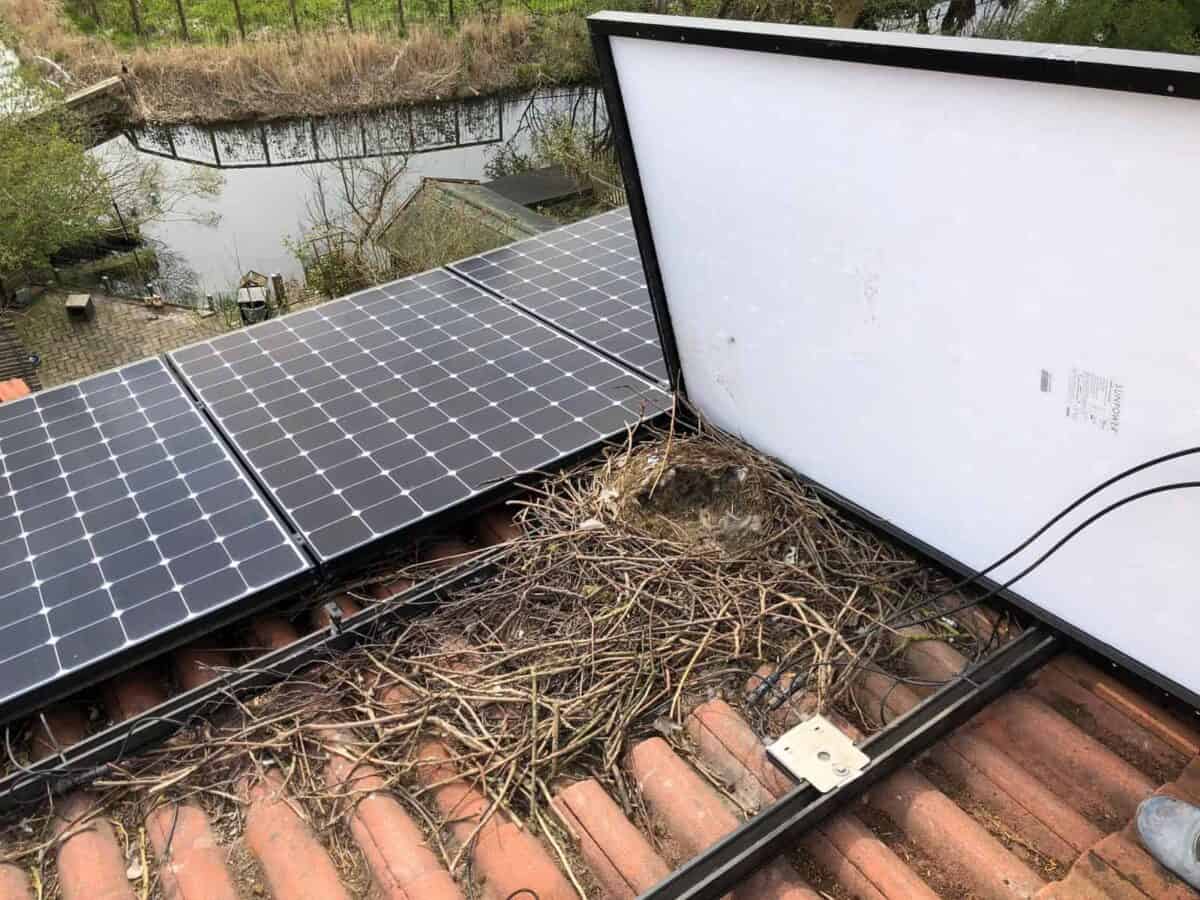
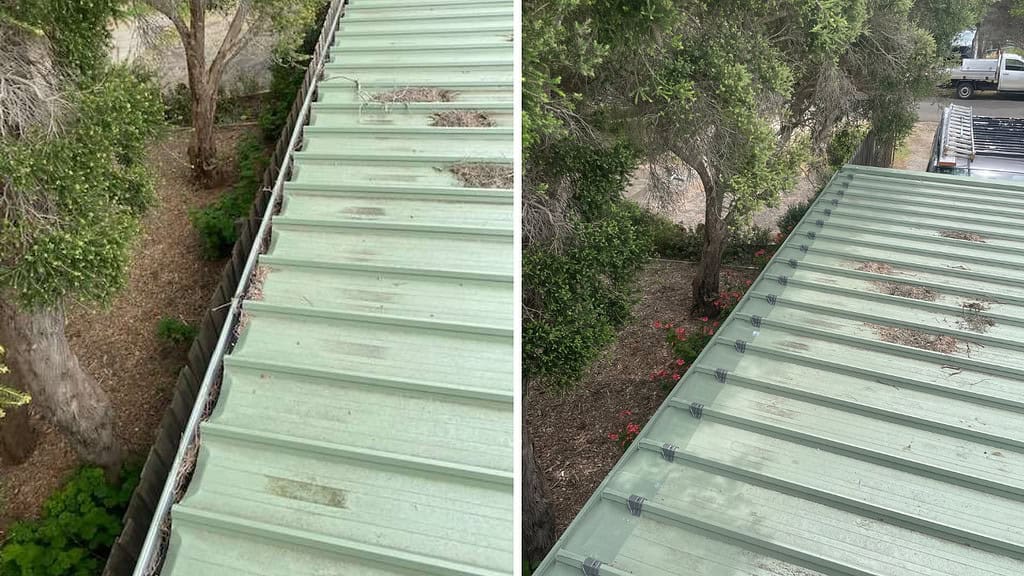
Solar Panels Are Warm—Birds Know It. Do Your Clients?

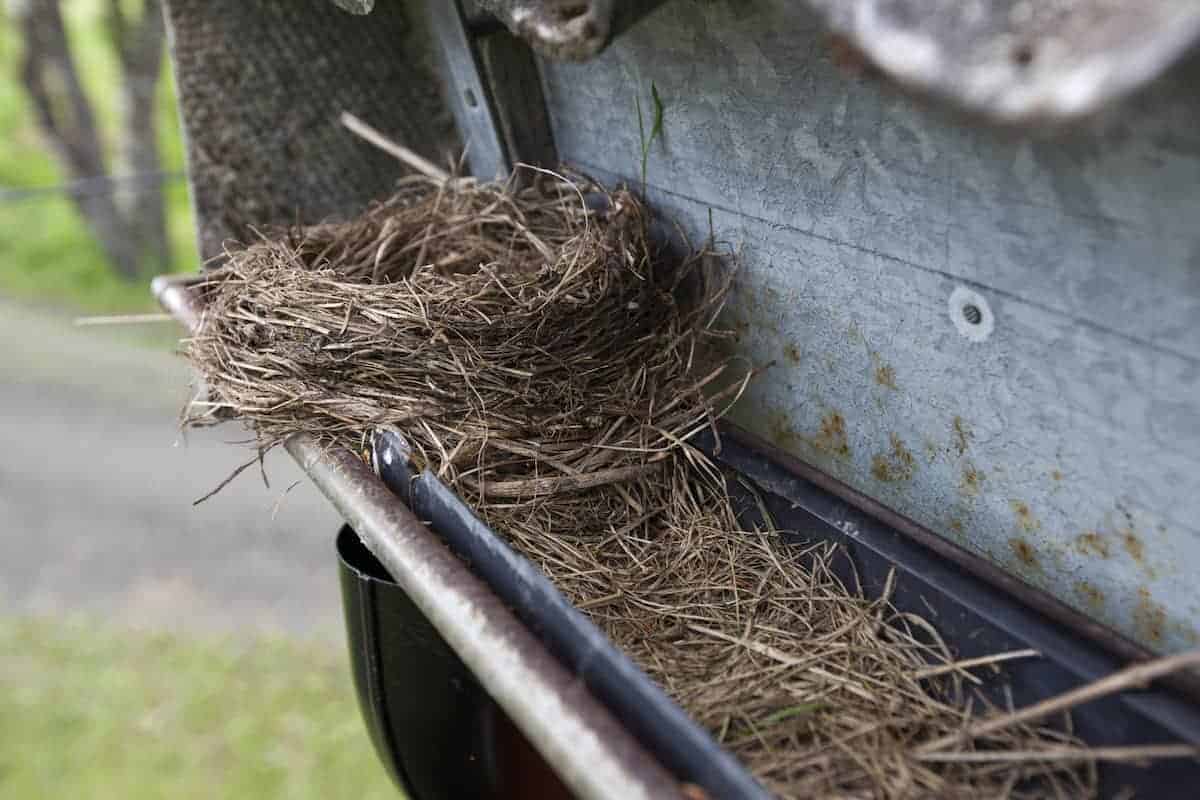
If you’ve been on a roof lately, chances are you’ve seen it. Or heard it. That familiar flapping under the panels. Welcome to winter, where solar panels become high-rise bird hotels, and your clients have no idea it’s happening.

While homeowners are curled up by the heater, pigeons are busy settling in under their shiny new solar investment. For birds, it’s the perfect winter retreat: warm, dry, and rent-free. For your clients? It’s a ticking time bomb of droppings, noise, corrosion, and eventually—complaints.

The good news? You’re in the perfect position to fix it before it becomes a problem. And no, we’re not talking about glue guns or garden owls.

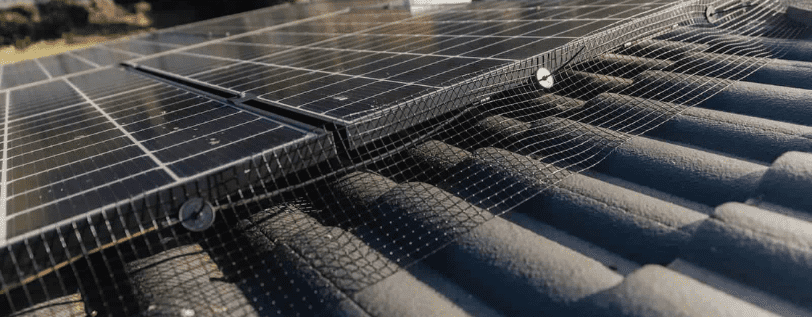
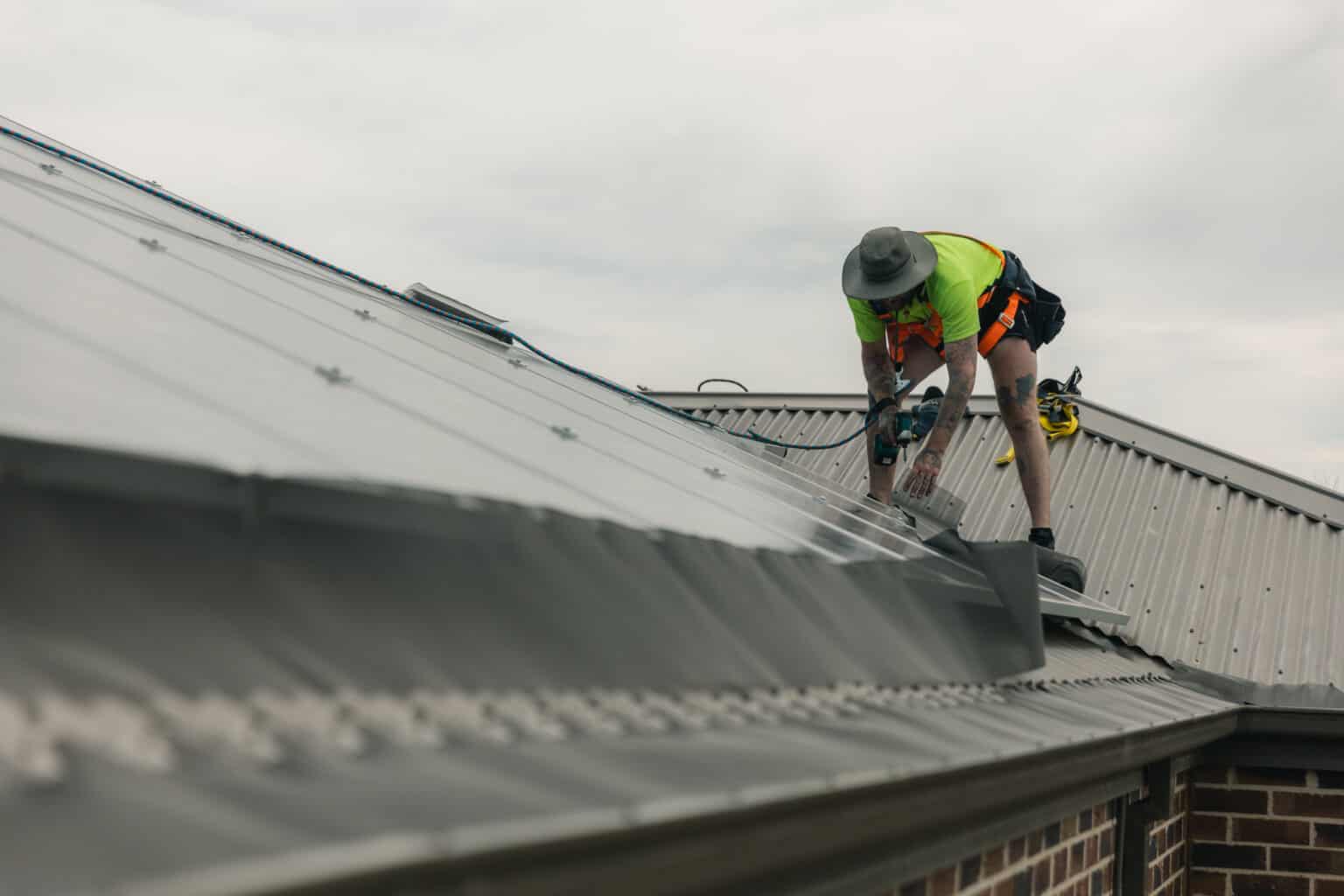
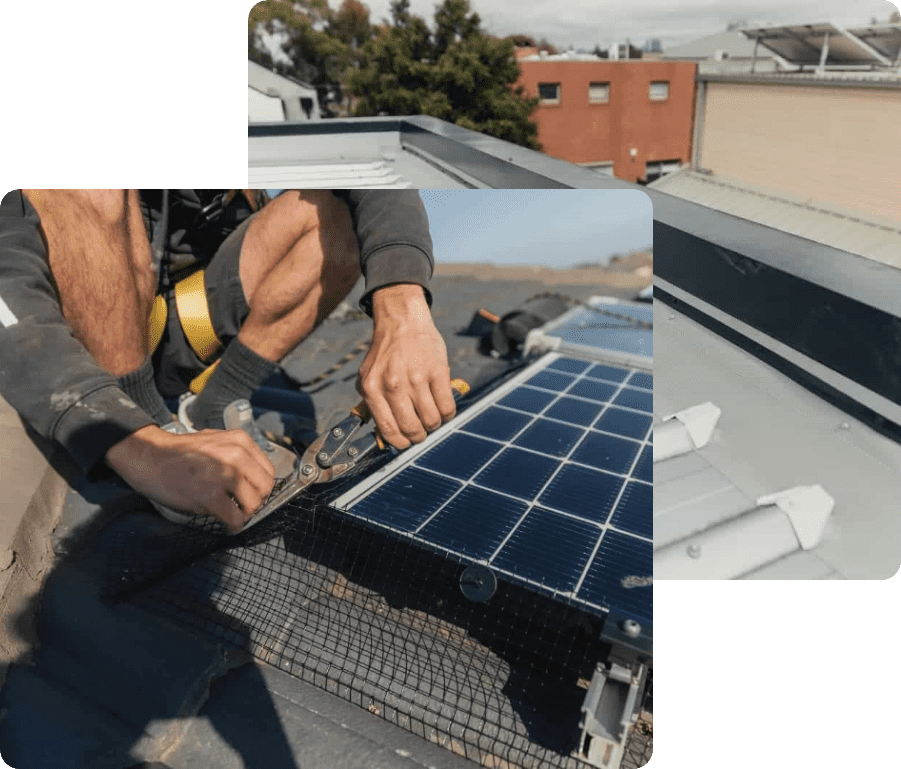
Enter SolarMesh—a fast, clean, no-drill bird-proofing system that adds serious value to your next job. Whether you’re quoting gutter guard, specifying roof fixtures, or just happen to be up a ladder this week—this is the winter add-on that sells itself.


Let’s break it down.
Why Winter Is Nesting Season Under Solar Panels

From a bird’s perspective, solar panels offer everything they need:

  • Warmth: Panels trap and retain solar heat, making the area beneath an ideal refuge during cold weather.

  • Shelter: The underside of panels offers protection from rain, wind, and predators.

  • Elevation: Roof height deters predators and provides a safe vantage point.

Birds are opportunistic. Once they find a warm, quiet cavity, they settle in—and often return year after year. That means winter is when they start looking, and installers should be initiating this conversation now, before the mess (and damage) begins.


Need gutter guard installed?

The Cost of Waiting: What Birds Can Do

Once nesting begins, the consequences are costly and time-consuming for your clients:

  • Corrosion: Droppings are acidic and can damage solar panel coatings and frames.

  • Blocked Gutters & Wiring Damage: Nesting debris often finds its way into gutters and around wiring, increasing fire and water damage risks.

  • Voided Warranties: Many solar providers exclude damage caused by animals from their warranty coverage.

  • Health Hazards: Bird droppings carry parasites and bacteria, creating risks for children and pets.


Let your clients know: prevention is far cheaper than remediation.

Introducing SolarMesh: A Simple Add-On With Big Value

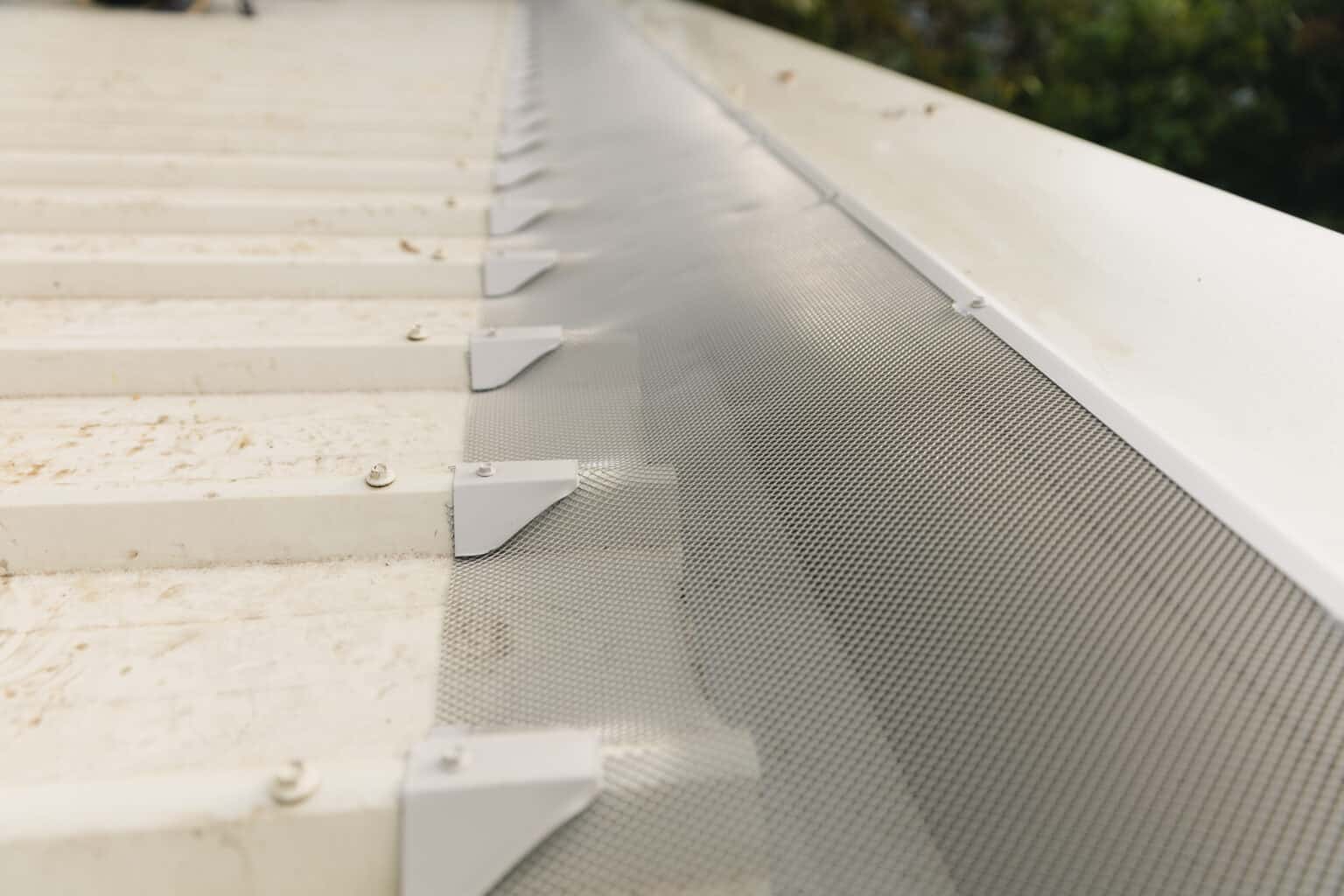
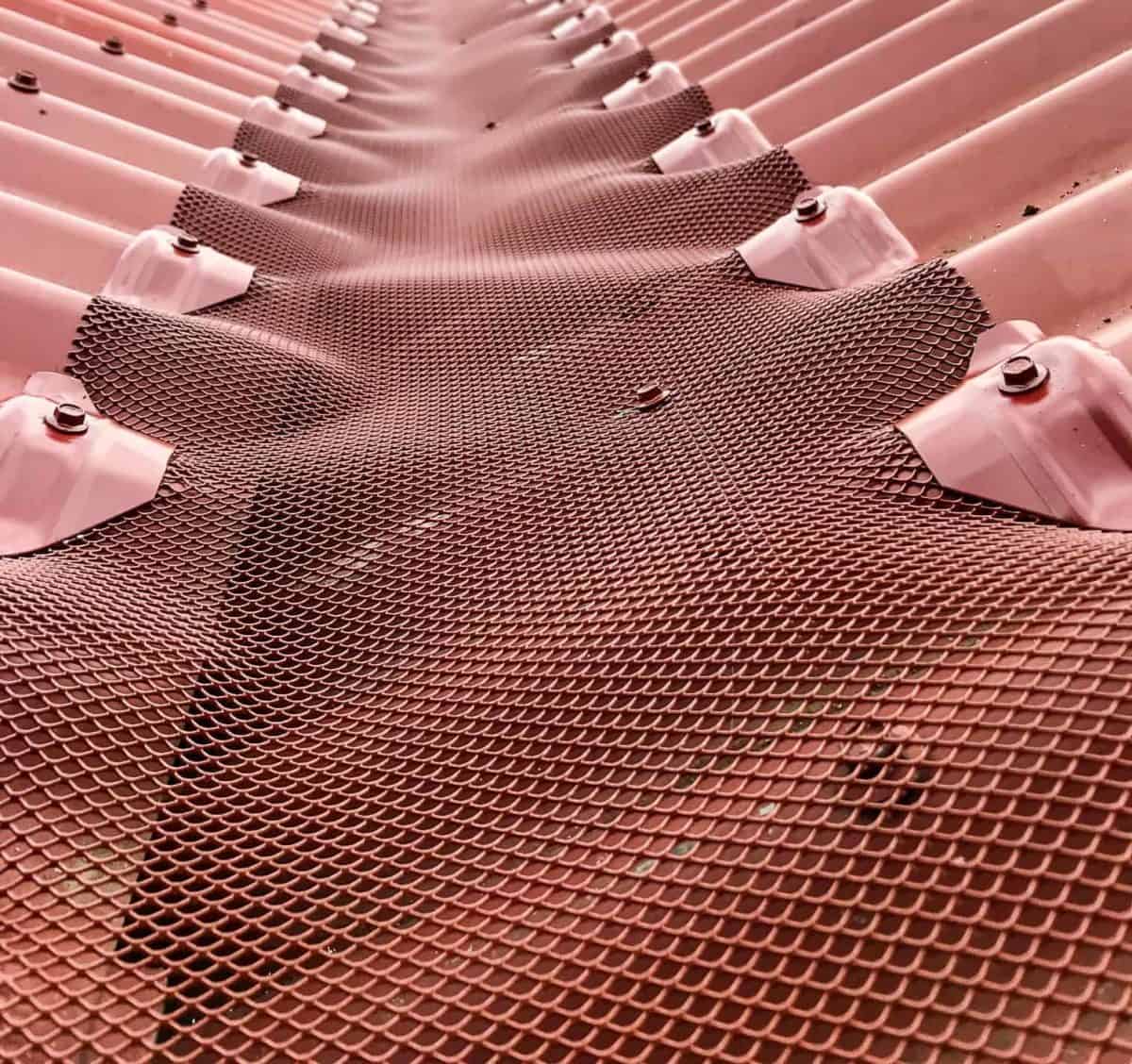
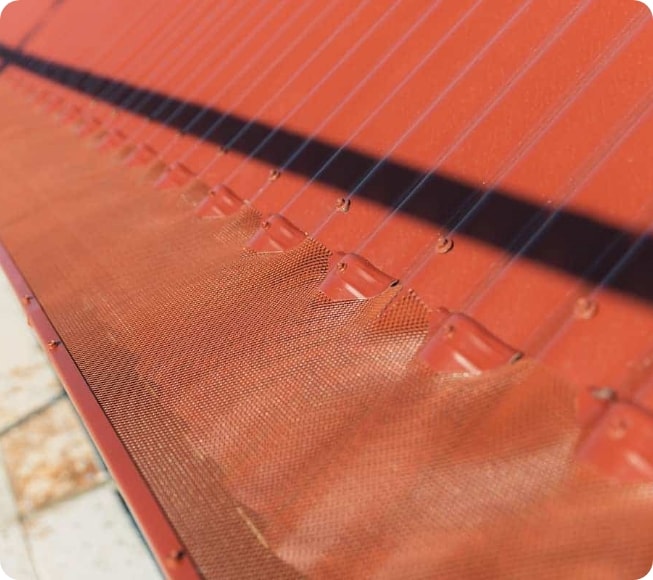
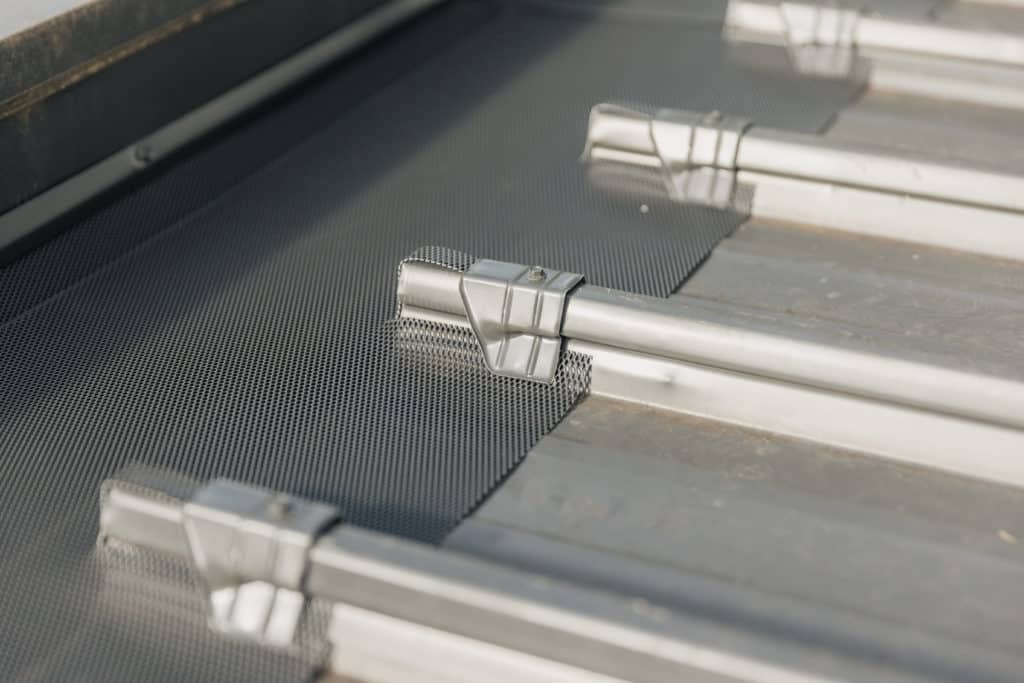
SolarMesh is our professional-grade bird-proofing mesh, purpose-built for trade installation on solar panel systems.
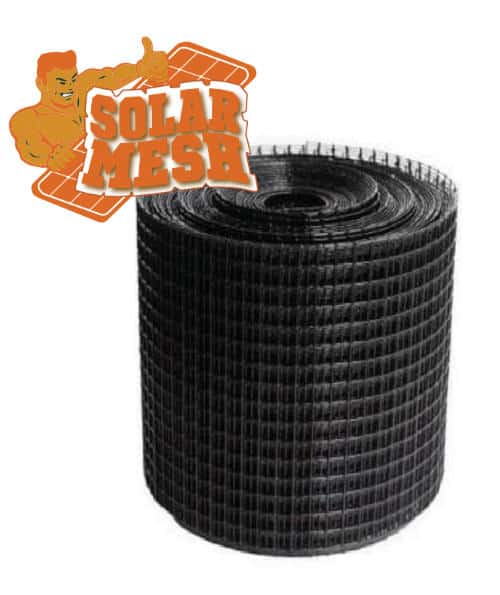
Features and benefits:

  • Stainless Steel or Galvanised Mesh with Black PVC coating

  • 12mm Aperture allows airflow while blocking nesting

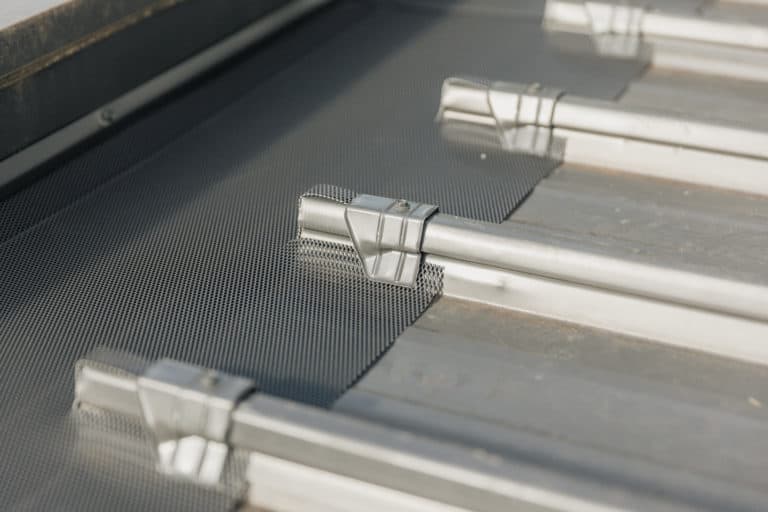
  • No-Drill Clip System—preserves panel warranties


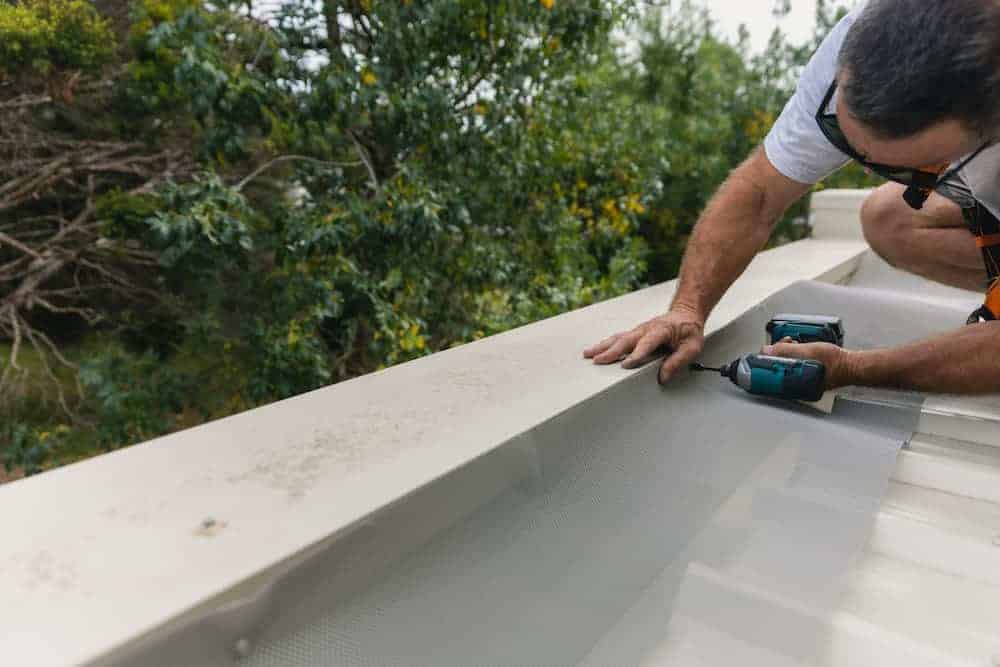
  • Fast Install, Professional Finish

Supplied in kits of 30m rolls and includes solar clips. It’s designed to integrate smoothly into your workflow—ideal for bundling into gutter guard installs, roof maintenance, or solar jobs.

How to Sell SolarMesh to Your Clients

1. Start the Conversation

Ask every client with solar panels:

“Have you had any issues with birds nesting under your solar panels?”

If they haven’t yet—great. Let them know that this winter is the critical time to prevent it. If they have, offer a long-term solution.

2. Highlight the Risks

Explain how solar panels provide the warmth and shelter birds look for in colder months, and how quickly nests cause mess, damage, and voided warranties.

Make it real by pointing out any feathers, droppings, or noise you observe during your inspection.

3. Bundle It In

SolarMesh is a simple add-on that’s quick to quote and install. If you’re already on the roof or quoting for a gutter guard, it’s a minimal upsell with major value.


Clients appreciate bundled solutions that prevent future problems—this is your opportunity to offer one.

Need gutter guards installed 

ScreenTech Has Everything You Need

As a ScreenTech installer, you get:

  • Access to SolarMesh kits—galvanised or stainless steel, cut-to-size

  • Poly or Metal Solar Clips—easy-fit, no drilling required

  • Trade Pricing & Fast Fulfilment from our warehouse

  • Marketing Support—sales folders, mesh samples, and expert advice


We’ve designed SolarMesh to help tradespeople grow their business through smart add-ons that solve real problems.

With solar panel installs on the rise, the demand for bird-proofing is only going to increase. Be the installer who solves the problem before it starts.

Don’t wait for nesting season to peak—equip your clients now while it’s quiet.

Need help quoting or want to order a SolarMesh trade kit?


Contact ScreenTech today—we’ll help you quote with confidence and install with ease.

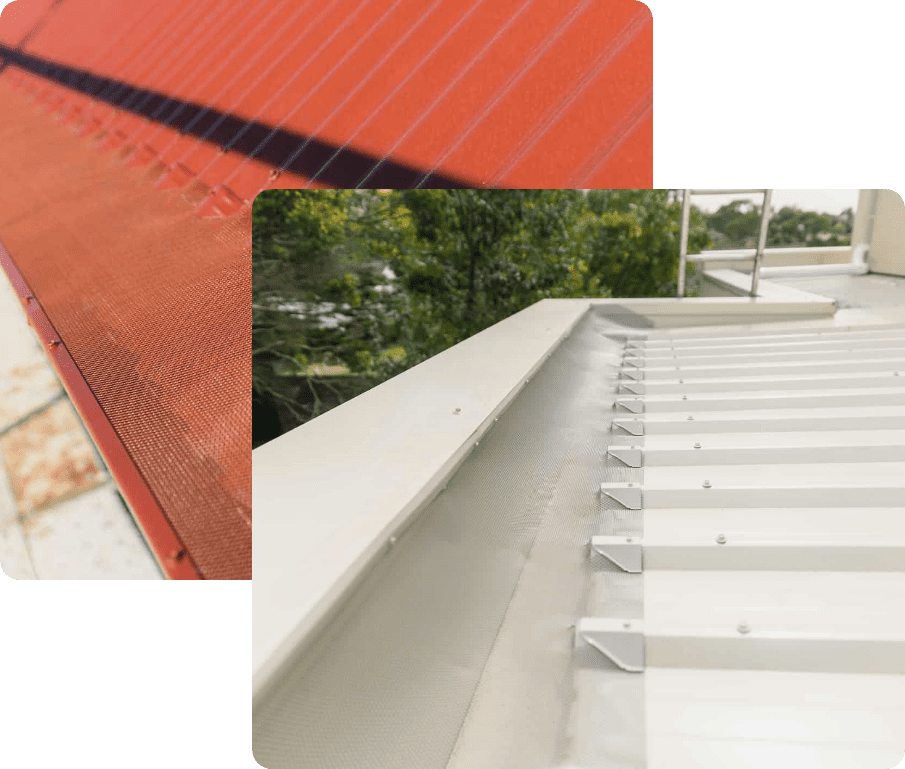
Look no further than ScreenTech’s TuffMesh®, GutterMesh, SteelMesh and SolarMesh products. Our mesh suits Klip-Lok®, Timdeck® corrugated roof types and tiled roofs. Get in touch with a ScreenTech installation partner today.


Categories
Blog Gutter Guard Installation

Tips That Sell Gutter Guards & Close Every Deal

Tired of clients asking for your “cheapest option” or going quiet after a quote?

You’re not alone. 

We know the real wins come when you stop just selling a product and start solving problems. Whether you’ve been installing for years or are new to gutter guard, these five straight-talking tips will help you take control of the sales process, win more jobs, and make every quote count.

1. Focus on the Problem—Not the Price

Stop telling yourself that you customers are just bargain hunting— that story your telling yourself s costing you. Big time. Your customers are looking for someone who understands their pains points and headaches, whether it’s water damage during storms, bird nesting issues, or bushfire risks. It’s not about being the cheapest; it’s about being the right solution. That starts with asking the right questions.

1. Start by building trust:

“Before I run through the options, can I ask a couple of quick things about your setup? That way I can recommend the right system for your roof.”

2. Tackle overflow concerns:

“You ever get water spilling over the gutters when there’s a proper downpour?”

Overflowing gutters are often a sign of blockages or a poor setup—this opens the door to position mesh as a preventive fix, not just an upgrade.

3. Identify pest or bird problems:

“Have you had birds nesting around the roofline or noticed any mess building up in the gutters?” 

And please don’t just look at gutters. Ask your customer if they would like a free bird proofing assessment and check out aircon units and even solar panels (if it is suitable and safe to do so).

This taps into a common issue homeowners often overlook until it becomes a nuisance. Present your mesh as a clean, long-term solution that keeps pests out and protects the home.

4. Qualify water usage:

“Are you collecting rainwater in a tank out? How are you using that water; drinking, garden, or something else?”

For customers using tank water, mesh isn’t just about gutter protection; it’s about water quality. Position Tuffmesh™ Aluminium as an effective certified drinking water-rated first filter, keeping out leaves, pests, and debris before they reach the tank.

5. Address fire safety if relevant:

“Has this place ever been near a spot fire or ember attack during summer?”

In bushfire-prone areas, showing that your product meets BAL ratings and offers certified ember protection is a powerful selling point, especially when it also cuts down on cleaning and risk. What’s more certain councils and areas offer discounts and rebates for bushfire protection. Do your homework; and it could upgrade your sale. 

Once you’ve uncovered what matters most to the customer—overflow, pests, water quality, or fire safety—you can confidently recommend the best solution. This isn’t about selling harder, it’s about listening better. When the client feels understood, the sale follows naturally.

Need gutter guard installed?

2. Offer Clear, Tiered Options

Keep your cool—don’t rush to offer the cheapest fix. That’s not what most clients actually want.

Instead, position yourself as the expert who understands their situation and has the right options to match. Offer three levels of protection, each with a clear benefit tied to their specific problem. Maybe it’s a fire-rated mesh for bushfire zones, a durable aluminium mesh for heavy leaf areas, or a cost-effective poly option for general protection.

Instead of a one-size-fits-all pitch, present three clear options tied directly to their concerns. Maybe it’s:

This isn’t upselling—it’s about tailoring the job to what matters most to them.

Take last week as an example. One of our installer partners quoted a property with large wattle trees overhanging the southern side. The client only wanted to do that section. But through asking the right questions, the installer uncovered that the client had other issues; birds and smaller debris on other parts of the roof. In the end, they installed TuffMesh™ just under the wattles to handle the fine litter, and used GutterMesh on the rest of the house. Same property, two solutions, one happy (and protected) customer.

This is how you show value. Not by pushing the most expensive option, but by recommending the right one, where it counts.


Here’s how you can explain it during a quote:

“Alright, based on what you’ve told me, I’d usually recommend three options so you can decide what suits best.”

Option 1:
“This first one’s top-of-the-line—it’s fully fire-rated and certified for ember protection. Perfect for your high-risk area and want to set and forget it for 20+ years.”

Option 2:
“This one’s our most popular. It’s strong enough to handle heavy leaf build-up and bird issues, but without the bushfire specs. Great for everyday protection.”

Option 3:
“And then there’s a solid entry-level option—does the job well in lower-risk areas or if you just need to meet basic council or water tank standards.”

“Any of these will solve the issues we talked about—the difference is how long you want it to last and how much protection you want built in. Happy to walk you through them.”

3. Show Don't Tell

Visual proof is powerful. At the end of the day, gutter guard is still a physical and tangible product—and your clients want to see and feel the difference.

Use This Script:

“Let me show you what we’re talking about—this is TuffMesh®. See how thick and rigid that mesh is? That’s why it spans wider gutters without sagging, and why it’s trusted in schools and commercial projects.”


“Now compare it to this one—it’s thinner, and while it might do the job short-term, it won’t last under the same pressure. Which one would you rather install on your own roof?”

Action Tip: Always have your sample kit on hand. Clients are far more likely to commit when they can physically compare materials and see the build quality.

Don’t Stop at Samples:

  • Use product videos or live demonstrations to show how Ember Guard filters debris while maintaining water flow.

  • Show how saddle fixtures lock in place to match roof profiles—especially valuable for metal and custom roof types.

Site-ready Proof:
Photos of completed installs, close-ups of Colorbond® matches, or short install clips can turn a “maybe” into a locked-in quote. If you don’t have visuals, ask us; we’ll sort you out with case studies or product visuals.

Need gutter guards installed 

4. Leave a Lasting Impression

Always leave behind a tangible reminder of your quality such as a mesh sample or a Trades Sales Folder. These tools let clients compare materials and understand why your solution stands out. Need samples? We’re happy to help; just get in touch.

5. Be The Installer They Can Trust

When it comes to home upgrades—especially ones involving the roof—clients are cautious. They’re not just buying a product; they’re putting their trust in the person who installs it. That’s why your role as both the advisor and the installer is so powerful.

People don’t want a slick sales pitch followed by some random contractor showing up later. They want one point of contact, one expert they can rely on. Someone who knows their property, has heard their concerns, and is personally invested in doing the job right.

The moment you say, “I’ll be the one installing it,” you’re building trust. You’re telling them:

  • You’re not just passing the job off.

  • You’re accountable for the results.

  • You take pride in your work.

This level of reassurance often makes all the difference—especially when the quote comes in higher than expected. Confidence in your skills and professionalism can turn hesitation into a “yes.”

Here’s how to communicate that clearly during the quote:

I’ll be the one installing this for you; it won’t be subbed out. I’ve done hundreds of these and I’ll make sure it’s done cleanly, safely, and looks good from the ground. Once it’s in, you shouldn’t need to touch the gutters again.”

If they seem unsure:

“If it helps, I can show you photos of previous jobs or walk you through exactly how we fit it to make sure everything stays watertight and neat”

Need Support?


Screen Tech is here to back you with product guidance, marketing materials, and expert advice. Reach out for support, request a trades folder, or place your next order—we’re just a call or email away.

Want to know more? ScreenTech sends out Colorbond® gutter guard samples and guides to architects and discusses projects and considerations.

Look no further than ScreenTech’s TuffMesh®, GutterMesh, SteelMesh and SolarMesh products. Our mesh suits Klip-Lok®, Timdeck® corrugated roof types and tiled roofs. Get in touch with a ScreenTech installation partner today.
Categories
Blog Gutter Guard Installation

What’s the Best Gutter Guard Against Wattle Trees?

Are your customers dealing with clogged gutters caused by wattle flowers and leaves? As a gutter guard installer, finding a reliable solution that doesn’t exacerbate your customer’s current problems is crucial. Remember, not all gutter guards are equal. 

So, what’s the best gutter guard against wattle trees? The answer is an ember guard mesh system. Its smaller hole size prevents fine flowers and thin leaves from clogging gutters, offering superior protection compared to gutter mesh, gutter brush and foam solutions.

In this article, we delve into why ember guard mesh systems are the best option for combating wattle tree debris, and spotlight two top products: TuffMesh Emberguard and GutterMesh Emberguard.

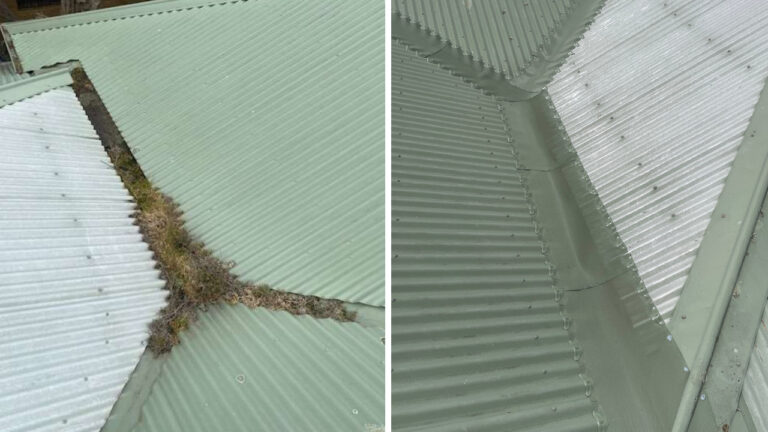
Tuffmesh emberguard product before and after

Why Ember Guard is Best Against Wattles?

Ember guard mesh systems are specifically designed with smaller holes, making them ideal for preventing the fine flowers and thin leaves from wattle trees from clogging gutters. Unlike regular gutter guards, the finer mesh of ember guards effectively blocks these small particles, ensuring your gutters remain clear and functional. Additionally, ember guards are superior to gutter brush and foam systems, as they prevent debris from getting stuck in the bristles or germinating in the foam, which can lead to further gutter damage.

Need gutter guard installed?

The Problems Caused by Wattle Trees

Although they are beautiful trees and native to Australia, wattle or acacias trees pose a significant challenge to gutter systems due to their unique characteristics. Here are the primary issues and considerations:

  • Abundant Flowers and Leaves: Wattle trees produce many fine flowers and leaves that can quickly accumulate in gutters.
  • Blockages: The fine flowers can lead to blockages that impede water flow, causing overflows.
  • Damage: These blockages can result in damage to gutters, roofs, and gables, leading to costly repairs.
klip-lok tuffmesh emberguard screentech

Why Other Types of Gutter Guard Solutions Are Less Effective

Regular gutter guards often have larger hole sizes that allow fine wattle debris to pass through, causing clogs. Gutter brush and foam systems also fall short, as the debris tends to get stuck in the bristles or starts to germinate in the foam, compromising the gutter’s effectiveness and leading to further damage. These solutions do not provide the fine filtration required to keep gutters clear of the small particles produced by wattle trees.

Need gutter guards installed 

Additional Steps to Protect Against Wattle Trees

To further protect your gutters from wattle tree debris, consider these additional steps:

  1. Regular Cleaning: One of the simplest ways to prevent clogging is regular gutter cleaning. Ensure you remove any accumulated debris, including wattle flowers, leaves, and other organic matter. Aim to clean your gutters at least twice a year, or more frequently during the flowering season.

  2. Install a Gutter Guard: Gutter guards are a practical solution to prevent debris from entering your gutters in the first place. Screen Tech Gutter Guard offers a range of high-quality gutter guard solutions, such as the TuffMesh™ and GutterMesh systems, which are designed to block even the smallest particles like wattle flowers while allowing water to flow freely.

  3. Trim Overhanging Branches: If wattle trees are close to your house, trimming overhanging branches can significantly reduce the amount of debris falling into your gutters. This proactive step can help minimise maintenance and prolong the effectiveness of your gutter guard.

  4. Use Downpipe Filters: Downpipe filters can catch debris that may have bypassed the gutter guard. These filters are easy to install and maintain, providing additional protection for your gutters.

TuffMesh™ Emberguard

ember guard on klip-lok

TuffMesh™ Emberguard is a premium product designed to offer superior protection against wattle tree debris. Its commercial-grade expanded aluminium mesh is not only strong but also has smaller holes that prevent fine particles from entering the gutters. The TuffMesh™ Emberguard can withstand large loads, including tree branches and vermin attacks, making it a robust choice for both residential and commercial properties. With a 25-year warranty and compliance with Australian standards, TuffMesh™ Emberguard ensures long-lasting protection and peace of mind for property owners.

Features and Benefits:

  • Commercial-grade expanded aluminium mesh: Provides superior strength and durability.
  • Smaller holes: Effectively prevent fine particles from entering the gutters.
  • Load-bearing capability: Can withstand large loads, including tree branches and vermin attacks.
  • Versatility: Suitable for both residential and commercial properties.
  • 25-year warranty: Ensures long-lasting protection.
  • Compliance with Australian standards: Guarantees high-quality and reliable performance.
See our latest case study, where ScreenTech supplied TuffMesh™ Emberguard as a solution to wattle tree debris in “TuffMesh™ Emberguard Leaf Proofing in Dandenong, Vic

GutterMesh Emberguard

Trimdek commercial gutter guard

GutterMesh Emberguard is another excellent option for combating wattle tree debris. Made from premium-grade aluminium, this gutter guard features a finer mesh that effectively blocks fine flowers and leaves. The GutterMesh Emberguard is proven to last over 20 years on Australian roofs, making it a reliable and durable choice. It also comes with a 15-year material warranty and complies with AS3959-2018 standards, ensuring it meets the highest safety and performance criteria. The powder-coated finish adds an extra layer of protection, making it suitable for a wide range of applications.

Features and Benefits:

  • Premium-grade aluminium mesh: Offers durability and strength.
  • Finer mesh: Blocks fine flowers and leaves effectively.
  • Long-lasting performance: Proven to last over 20 years on Australian roofs.
  • 15-year material warranty: Provides extended protection.
  • Compliance with AS3959-2018 standards: Ensures safety and high performance.
  • Powder-coated finish: Adds an extra layer of protection and suitability for various applications.

When it comes to protecting your gutters from the persistent problem of wattle tree debris, ember guard mesh systems stand out as the best solution. Products like TuffMesh™ Emberguard and GutterMesh Emberguard offer superior protection with their fine mesh, durability, and compliance with Australian standards. By choosing these high-quality ember guards, you can ensure that your gutters remain clear and functional, saving time and money on maintenance and repairs. Invest in the best and keep your properties protected from the challenges posed by wattle trees.

Want to know more? ScreenTech sends out Colorbond® gutter guard samples and guides to architects and discusses projects and considerations.

Look no further than ScreenTech’s TuffMesh®, GutterMesh, SteelMesh and SolarMesh products. Our mesh suits Klip-Lok®, Timdeck® corrugated roof types and tiled roofs. Get in touch with a ScreenTech installation partner today.
Categories
Architecture Blog

2024’s Top Architectural Trends & Gutter Guard’s Role

2024, the architectural landscape continues to evolve, driven by a confluence of environmental considerations, technological advancements, and a renewed appreciation for natural materials. These shifts are not mere trends but reflect a broader societal movement towards sustainability, efficiency, and harmony with the natural world. At Screen Tech, we recognise architects’ pivotal role in shaping our built environment. This year, we’ve engaged closely with our architectural partners to explore the forefront of architectural innovation.

This exploration has unveiled a series of compelling trends that promise to redefine our spaces, from the dense urban fabric of our cities to the serene expanses of our rural settings. These trends share a common thread: they demand thoughtful consideration of how we protect and preserve the integrity of our structures against the elements.

Top 10 Architectural Trends of 2024 and How ScreenTech is Leading the Way

  1. Eco-friendly and Sustainable Designs
  2. Biophilic Design
  3. Smart Technology Integrations
  4. Natural Timber Material Use
  5. Refurbishment, Repurposing, and Retrofit Solutions
  6. Geometric Roof Designs
  7. Architectural Shingles
  8. Fire-resistant Design
  9. Natural and Rustic Finishes
  10. Cool Roof Solutions 

In this context, Screen Tech’s advanced gutter guard systems emerge as products and integral components of architectural design solutions. They enhance buildings’ longevity and aesthetic appeal while aligning with the principles of sustainability and innovation that are increasingly central to contemporary architecture. This blog post delves into the top architectural trends of 2024 and highlights how Screen Tech is innovatively supporting architects in navigating and excelling in this evolving landscape.

1. Eco-Friendly and Sustainable Designs

2024 marks a pivotal year where sustainability transitions from a trend to a foundational principle. Architects are increasingly called upon to weave eco-friendly practices and materials into the fabric of their designs, not just as an afterthought but as a central feature of modern architecture. This shift is driven by a growing awareness of environmental issues and a collective desire to mitigate the impacts of climate change, underscoring the need for buildings that harmonise with their surroundings and promote a sustainable way of living.

Screen Tech is proud to align our product offerings with this green revolution. Our TuffMesh™ and SteelMesh solutions are a testament to our commitment to eco-friendly architecture. Made from materials like powder-coated Aluminum and Colorbond® steel, these products are durable and recyclable and support crucial sustainability practices such as rainwater harvesting. Our TuffMesh™ range boasts AS4020 ratings, and our gutter guard systems ensure that architects can design buildings that look good and contribute positively to the environment.

By incorporating elements like TuffMesh™ and SteelMesh into their projects, architects can significantly reduce maintenance needs and enhance the longevity of structures, all while adhering to the highest standards of environmental stewardship. To learn more about our rainwater harvesting solutions, read our page “Rainwater Harvesting Gutter Guard Solution.”

See our TuffMesh® range.

2. Biophilic Design

Further benefits of gutter guards include significantly reducing the need for regular cleaning and maintenance. Gutter cleaning is an arduous and tedious task. Installing gutter guards saves many homeowners time and effort and reduces the risk of falls and other accidents associated with cleaning. Gutter guard protection systems effectively prevent blocked gutters ensuring that gutters remain clear and functional.

Gutter guards can reduce the amount of gutter maintenance required for gutters but do not eliminate the need for gutter maintenance. Even the best gutter guards are not 100% effective at preventing all debris, leaves, and other materials from entering the gutter system. Over time, some residue may accumulate in the gutter system, requiring cleaning to maintain efficiency and prevent clogging.

Additionally, gutter guards themselves may require cleaning and maintenance to remain effective. For example, some gutter guards may need to be cleared of accumulated debris on top of them or cleaned to remove any dirt or other materials collected on their surfaces.

Furthermore, even with gutter guards in place, it is still important to inspect the gutter system regularly to ensure it is functioning properly and to identify any potential issues that may need to be addressed. This may include checking for any damage to the gutter system, ensuring water flows properly through the gutters and downspouts, and checking for any signs of clogging or other issues.

Read: 5 Best Gutter Guards for Stratco Gutters

Order a sample pack with commercial and standard gutter mesh samples. 

3. Protecting Smart Technology Integrations

The evolution of smart homes and buildings is no longer a glimpse into the future; it has become the present standard. In 2024, the architectural industry sees a deeper integration of smart technologies to enhance energy efficiency, security, and occupant comfort. Protecting solar investments becomes paramount as architects integrate more intelligent systems into their designs.

solar panel bird proofing

Screen Tech’s SolarMesh stands at the intersection of innovation and functionality, offering a pivotal solution for protecting solar panel investments. Debris, leaves, and pests can significantly hamper solar panels’ efficiency, which is integral to the energy efficiency goals of modern smart buildings. SolarMesh ensures that these renewable energy sources continue to operate at optimum levels by providing a barrier against such common issues. Learn more about solar mesh via our blog, “Why solar mesh is a must and not an optional extra!”

Order a sample pack. 

4. Use of Natural Timber Materials

2024 sees a profound appreciation for the intrinsic value of natural materials. Stone and wood, with their timeless elegance and enduring strength, are being increasingly incorporated into designs that seek not just to impress visually but to connect spaces with the natural world. This resurgence is not merely aesthetic but a response to a growing desire for authenticity, sustainability, and spaces that evoke a sense of calm and connection to the earth.

Effective water management plays a vital role in preserving the beauty and integrity of natural materials. Our gutter guard systems are meticulously engineered with features tailored to maximise water drainage capacity while preserving natural materials. Our ember guard products incorporate directional holes and specially designed water troughs. With their smaller hole size, ember guards do not compromise on water capture efficiency. This balance is critical in climates where heavy rainfall can challenge the integrity of architectural designs, particularly those incorporating natural timber.

Moreover, Screen Tech guides architects on implementing a ‘ski-slope’ installation design. This strategic approach ensures that the gutter system remains free of debris and leaves by facilitating their natural slide off the roof, thus preventing accumulation and blockage. This design philosophy not only enhances the functionality of the gutter guard system but also complements the aesthetic appeal of architectural projects by maintaining clean lines and unobstructed surfaces. Our solutions give architects the peace of mind that their choice of natural materials will stand the test of time, resist the elements, and retain their beauty.

Need gutter guard installed?

5. Refurbishment, Repurposing, and Retrofit Solutions

The focus on refurbishing, repurposing, and retrofitting existing structures has emerged as a key trend. This approach pays homage to the architectural narrative embedded within historical edifices and aligns with the ethos of sustainable development by maximising the lifecycle of existing resources. The challenge and opportunity here lie in seamlessly blending the old with the new, ensuring that structures meet contemporary functional requirements while preserving their intrinsic historical and aesthetic value.

Screen Tech’s contribution to this trend is our comprehensive architectural consultation service. We understand that each refurbishment or retrofit project presents its own set of unique challenges and opportunities. Therefore, our team of experts has collaborated closely with architects and designers to identify tailor-made gutter guard solutions that respect and enhance the architectural vision since the project’s inception. Our TuffMesh™ and SteelMesh products, known for their durability and design flexibility, are foundational in protecting and preserving the structural integrity of repurposed buildings. For more information for architects, read “10 Architectural Considerations for Gutter Mesh.”

Our products, such as the TuffMesh™ and SteelMesh ranges, are designed to integrate seamlessly with a variety of architectural styles, from historic renovations to modern retrofits. Their robust construction ensures long-term durability and protection against water damage, a crucial consideration in the preservation and functionality of repurposed buildings.

Moreover, our consultation service places a strong emphasis on aesthetic integration. Screen Tech’s gutter guards are designed to be architecturally sympathetic, complementing the building’s original or intended appearance without compromising functionality. Whether it involves adapting a historic facade or modernising an industrial space for residential use, our solutions are crafted to be inconspicuous yet effective, ensuring water management systems align with the project’s overall design ethos.

6. Geometric Roof Designs

Moving beyond the traditional gable and hip roofs, architects are now embracing asymmetry and angular shapes, a testament to the evolving aesthetic sensibilities and technological advancements in construction. These geometric roofs are not merely aesthetic statements; they redefine the functionality of the roof space, offering enhanced natural lighting, improved rainwater harvesting capabilities, and a distinctive character to buildings.

With the advent of these geometric designs comes the practical consideration of managing more prominent and more complex gutter systems. Traditional gutter solutions often fall short in addressing the unique challenges presented by these modern structures. Screen Tech’s TuffMesh™ gutter guard system rises to this occasion, offering unmatched strength and flexibility. Designed to span across larger gaps and accommodate the unconventional shapes of modern architecture, TuffMesh™ ensures that even the most avant-garde designs benefit from effective water management and protection. Learn more about how to install gutter guard to box gutters, via our YouTube video. 

The importance of maintaining the integrity of these larger gutter systems cannot be overstated. Water damage and blockages can detract from the aesthetic appeal of bold geometric structures and compromise their structural integrity. Screen Tech’s solution not only provides unmatched protection but does so in a way that respects the architectural vision. Our gutter guard systems are discreet and adaptable, ensuring that the functional necessity of water management does not impede the creative ambition of architectural designs. TuffMesh™ not only offers unmatched durability to span larger gaps but blends seamlessly with the modern aesthetic of geometric roofs. This compatibility ensures that the functional aspects of rainwater management do not detract from the architectural vision.

7. Architectural Shingles

Architectural shingles, distinguished by their high-end, dimensional appearance, add depth and texture to roofs. They offer a variety of styles and colours that enable architects around Australia and beyond to craft visually striking and unique rooftops. Far from being purely decorative, architectural shingles also provide enhanced durability and weather resistance, making them an ideal choice for areas subject to diverse climatic conditions.

Screen Tech’s innovative installation techniques are used in projects featuring architectural shingles or larger valley roofs. Our expertise lets us advise architects on incorporating our gutter guard systems to complement architectural shingles’ intricate designs and configurations. This synergy ensures that the functional requirements of effective water management and debris protection are met without compromising the aesthetic integrity of the roof design.

The appeal of architectural shingles lies not just in their visual richness but also in their ability to create a distinct architectural statement. By providing detailed consultation and tailored solutions, Screen Tech aids architects in realising their vision, ensuring that each project’s unique aesthetic and functional demands are addressed without interfering with the architectural statement. Our gutter guard systems are designed to be as adaptable and resilient as the materials they protect. They offer peace of mind that the beauty and integrity of architectural shingle roofs are preserved over time.

Need gutter guard installed?

8. Fire-resistant Design

aluminium ember mesh ember guard

Fire-resistant roofing materials have emerged as a paramount trend, driven by the urgent need to safeguard homes against fires’ devastating impact. This approach to architectural design enhances structures’ safety and resilience and provides homeowners with much-needed peace of mind.

Recognising this critical need, Screen Tech has curated the most comprehensive range of fire protection mesh available. Our ember guard and fire guard range, available in aluminium and steel, addresses the multifaceted threat posed by bushfires with hole sizes below the minimum of 2mm. We designed our products to protect against ember attack, radiant heat, and direct flame contact, representing the pinnacle of fire-resistant technology in roofing materials. Understand more about BAL ratings from our blog, “Gutter Guard BAL Ratings Explained.”

Available in all Colorbond® colours, Screen Tech’s fire protection mesh solutions seamlessly integrate with a wide variety of architectural styles, ensuring that safety measures do not compromise the aesthetic integrity of your home. This compatibility is essential for maintaining properties’ visual appeal while significantly elevating their safety profile against fire hazards.

9. Natural and Rustic Finishes

In 2024, we are seeing a resurgence in the popularity of natural and rustic finishes, and we have seen sale trends in Colorbond® colours, including basalt, dark brown and terracotta. This trend is a nod to the timeless beauty of the earth’s materials and a shift towards authenticity in design. Materials like timber and terracotta tiles have resurfaced for their aesthetic appeal and ability to impart warmth, texture, and a connection to nature in rural and suburban settings. These finishes express a growing desire among architects and homeowners alike for spaces that feel grounded, inviting, and inherently connected to the natural world.

Screen Tech’s full Colorbond® range and tile-colour-matched products complement these natural finishes. Our commitment to providing solutions that enhance and preserve the beauty of rustic designs is evident in our meticulously crafted gutter guard systems. Our expanded tile roof colour range makes us stand out above our competitors.

10. Cool Roof Solutions

With Australia’s climate presenting a significant challenge to maintaining comfortable indoor temperatures, especially during the intense summer months, cool roof technology has surged in popularity.

In response to this growing demand, Screen Tech has introduced its new Dover White™ product colours within our TuffMesh™, SteelMesh, and GutterMesh ranges. This strategic expansion is not merely about offering new colour options; it represents our commitment to supporting cool roof technology. The reflective properties of the Dover White™ colour enhance the effectiveness of cool roofs, complementing their heat-reflective capabilities and contributing to buildings’ overall energy efficiency.

Want to know more? ScreenTech sends gutter guard samples and guides to architects and discusses projects and considerations.

ScreenTech’s TuffMesh® range is the best commercial-grade gutter guard in Australia. It is only available for professional installation and not as a DIY option.

Look no further than ScreenTech’s TuffMesh®, GutterMesh, SteelMesh and SolarMesh products. Our mesh suits Klip-Lok®, Timdeck® corrugated roof types and tiled roofs. Get in touch with a ScreenTech installation partner today.
Categories
Blog Ember Guard

Gutter Guard BAL-Ratings Explained 

“To buy BAL-rated gutter guards or not?” That question stumps many architects, builders, and tradespeople when planning construction in bushfire-risk areas. And you may be asking: so, what are BAL-rated gutter guards? BAL-rated gutter guards protect against ember penetration and flame exposure. They are assessed according to Bushfire Attack Level (BAL) ratings, ensuring they meet specific material, design, and durability standards to withstand bushfire conditions.

Your choice of gutter guard systems goes beyond mere functionality in areas threatened by bushfires. It’s about selecting a system that complies with BAL ratings and significantly bolsters a building’s defence against the unpredictable nature of bushfires. This article is dedicated to demystifying the impact of BAL ratings on gutter mesh selection for professionals in the construction industry. By exploring the intersection of BAL ratings and gutter guard specifications, we aim to equip architects, builders, and tradespeople with the knowledge to make informed decisions, ensuring their projects are compliant and resilient in the face of bushfire threats.

Need gutter guard installed?

Understanding BAL Ratings

Bushfire Attack Level ratings are a cornerstone of Australian building standards, designed to assess a property’s risk of bushfire exposure. These ratings range from BAL-LOW, indicating minimal risk, to BAL-FZ (Flame Zone), representing the highest risk. Each level dictates specific building materials and construction techniques, including gutter guard system installations, to enhance a structure’s resilience to bushfire threats.


There are different BAL ratings, each indicating a different level of bushfire risk:

BAL LEVEL EXPLANATION

BAL-LOW

Little to no risk.

BAL-12.5

Risk of embers, radiant heat up to 12.5KW/m² particularly those igniting surrounding vegetation.

BAL-19

Increased risk from embers and burning debris ignited by wind and potential exposure to radiant heat up to 19KW/m².

BAL-29

High risk, with increased ember attack and burning debris ignited by wind and even higher potential exposure to radiant heat up to 29KW/m².

BAL-40

Very high risk. Houses may be exposed to flames from the firefront, increased ember attack, and higher levels of radiant heat up 40KW/m².

BAL-FZ (Flame Zone)

Extremely high risk. Direct exposure to the flames from the fire front, ember attacks, and very high levels of radiant heat over 40KW/m².

The construction requirements for buildings increase with each level of BAL rating to enhance the structure’s resilience to bushfires. This may include specifications for things like the type of materials used, the design of the building, the type and placement of windows, and other features. Each state’s BAL ratings have consistent core principles across states and territories. All states and territories base their BAL ratings on the following:

  • Proximity to classified vegetation types.
  • The amount of vegetation (fuel).
  • The slope of the ground.
  • Fire danger indices.

It’s essential to note that determining the BAL rating for a property isn’t a simple matter. It considers various factors, including the type of vegetation surrounding the property, its distance from the property, and the slope of the land. If you are building or renovating in a bushfire-prone area, it’s crucial to have a professional assess the BAL rating of your property. This will ensure that you comply with local building regulations and best practices for safety.

bushfire protection

BAL Ratings State-by-State Overview

While the foundation of BAL ratings, based on the Australian Standard AS 3959-2018, is nationally consistent, local adaptations and regulations can vary, influencing how these standards are applied:

  • New South Wales (NSW): Here, additional state-specific guidelines complement the national standards, ensuring that buildings are equipped to withstand local bushfire conditions.
  • Victoria (VIC): The introduction of the Bushfire Management Overlay (BMO) adds another layer to the planning and construction process, tailoring bushfire defence measures to the region’s unique landscape.
  • Queensland (QLD) and Beyond: Each state, including South Australia, Western Australia, Tasmania, the Northern Territory, and the Australian Capital Territory, integrates the national standards with local insights, creating a nuanced regulatory environment that addresses the specific bushfire risks of each area.

Need gutter guards installed 

Australian Standard AS 3959-2018

The Australian Standard AS 3959-2018, “Construction of buildings in bushfire-prone areas,” provides guidelines on construction materials and methods suitable for various Bushfire Attack Levels (BALs). The standard categorizes bushfire risk into several BALs based on the potential exposure to ember attack, radiant heat, and direct flame contact. For each BAL, the standard provides requirements for various construction elements, from the site to floors, walls, windows, roofs, and more.

For the construction of roofs, including the use of a rated gutter guard and fire ember guard:

  • Materials: Ember guard mesh is to be made of non-combustible materials, which means they won’t ignite and spread flames. The term “non-combustible” is defined in the National Construction Code. Aluminium is generally suitable for BALs up to BAL-29. However, for BAL-40 and BAL-FZ, more robust materials, like steel or bronze, are recommended due to their higher resistance to heat and flames.
  • Aperture Size: The aperture size of a fire ember guard should be at most 2mm to effectively block out embers, which are a primary ignition source during bushfires.

Where to Find in the Document

The specifics regarding materials, construction methods, and other requirements are typically spread throughout the document, with sections dedicated to various construction elements.

  • The section on roofing (which would cover gutter and ember guard requirements) is an essential place to look.
  • Definitions and explanations of terms like “non-combustible” might be found towards the beginning of the document.
  • There may also be tables or appendices towards the end of the standard that summarize the requirements for each BAL.

To locate the exact details and specifications for ember and gutter guards, navigate to the standard section dedicated to roofing and external construction elements. However, for the precise location within AS 3959-2018, consulting the document’s table of contents or index would be the best approach.

For the utmost accuracy and to ensure compliance with the latest ember guard mesh regulations, it is always recommended to consult the standard directly or to work with a professional experienced in its application.

The Importance of Local Council Consultation

One of the most crucial steps in ensuring your project complies with BAL requirements is consulting with your local council. Local councils provide the most current and relevant BAL ratings and building requirements, which can vary significantly even within states. This step is not just about compliance; it’s about leveraging local expertise and resources to enhance the safety and resilience of your projects.

Role of Gutter Guards in Bushfire Defence

Gutter guard systems are not just about preventing clogged gutters; they’re a critical component in a property’s defence strategy against bushfires and wind-borne embers. By blocking airborne embers and preventing them from igniting debris within gutters, ember guards play a crucial role in enhancing a building’s resilience. However, it’s essential to choose the right ember guard materials. In gutter protection, ember guard products are the compliant gutter guard solution for any bushfire-prone area for gutter protection.

What is Ember Mesh?

Ember mesh refers to a specialised type of mesh designed to protect buildings and structures from the intrusion of embers during a bushfire. This mesh is typically installed over openings such as vents, eaves, and especially gutters and downpipes to prevent embers from entering and igniting materials inside or accumulating in areas that could lead to a fire.
Ember mesh is made from non-combustible materials, such as certain metals, to withstand high temperatures without igniting.

aluminium ember mesh ember guard

Ember mesh is characterised by its fine weave, with apertures small enough (usually not more than 2mm) to block embers’ passage while allowing for ventilation and water flow, unlike typical gutter mesh. The use of ember guard is a critical component in building design and construction in bushfire-prone areas, helping to enhance the structure’s resilience against the threat of ember attack, one of the primary ways bushfires spread to residential areas.

While aluminium guards are suitable up to BAL-29, higher-risk areas (BAL-40 and BAL-FZ) require more robust materials like steel or bronze, known for their superior resistance to heat and flames.

steel mesh

Ember & Gutter Guard Mesh State Specifications

Ember and gutter guard specifics can vary by state and territory, reflecting each jurisdiction’s unique fire behaviours, climates, and local experiences.

Let’s break down the key requirements or differences for ember guards in each state and territory based on the Australian Standard AS 3959-2018 and local variations:

STATE SPECIFICATIONS

New South Wales (NSW)

  • Ember guards are required for buildings in bushfire-prone areas with a BAL rating of 12.5 or higher.
  • Ember mesh is non-combustible and has a maximum aperture of 2mm.
  • Aluminium is appropriate for BAL levels up to BAL29, but steel or bronze are used for higher BAL levels, like BAL-40 and BAL-FZ.

Victoria (VIC)

  • For areas with BAL-12.5 and above, non-combustible ember guards with an aperture of 2mm or less are required.
  • Victoria emphasises a holistic approach, incorporating the Bushfire Management Overlay into planning.
  • Aluminium is appropriate for BAL levels up to BAL29, but steel or bronze are used for higher BAL levels, like BAL-40 and BAL-FZ.

Queensland (QLD)

  • Queensland mandates ember guards for homes with a BAL rating of 12.5 or higher.
  • They must be non-combustible with a maximum aperture of 2mm.
  • Material specifics vary based on location and local council regulations, but the state typically follows the guidelines in AS 3959-2018.

South Australia (SA)

  • Homes in areas with BAL-12.5 and above must have ember guards.
  • They should be constructed of non-combustible material with a maximum aperture of 2mm.
  • Aluminium is appropriate for BAL levels up to BAL29, but steel or bronze are used for higher BAL levels, like BAL-40 and BAL-FZ.

Western Australia (WA)

  • Western Australia requires ember guards for homes in BAL-12.5 or higher areas.
  • As with other states, the gutter mesh must be non-combustible and have an aperture of 2mm or less.
  • WA has additional guidelines that supplement AS 3959-2018, and while they follow the general principles, there might be local variations or interpretations. It’s advisable to consult local guidelines to be sure.

Tasmania (TAS)

  • Ember guard is necessary for homes in areas with BAL-12.5 or higher.
  • They should be non-combustible and have a maximum gap size of 2mm.
  • Aluminium is appropriate for BAL levels up to BAL29, but bronze or steel mesh are used for higher BAL levels, like BAL-40 and BAL-FZ.

Northern Territory (NT)

  • The NT may have less emphasis on bushfire standards due to its different climate and vegetation. However, where relevant, an ember guard with non-combustible materials and a maximum aperture of 2mm would align with the national standard.

Australian Capital Territory (ACT)

  • The ACT requires an ember guard for homes with a BAL rating of 12.5 or higher.
  • These gutter guards should be non-combustible with an aperture size not exceeding 2mm.
  • Aluminium is appropriate for BAL levels up to BAL29, but steel or bronze are used for higher BAL levels, like BAL-40 and BAL-FZ.

While the general requirement for an ember guard — being non-combustible and having a maximum aperture of 2mm — is relatively consistent across all states and territories, the application, enforcement, and additional considerations can vary. It’s also important to remember that local councils may have specific gutter protection requirements or recommendations based on localised risks. Always refer to local regulations and guidelines when planning or retrofitting ember guard and gutter mesh.

Other Differences Across States

While the core BAL ratings remain the same, states and territories may:

  • Have Additional Local Regulations: Some jurisdictions might introduce supplementary requirements for construction, planning, and vegetation management based on local fire history, climate, and other factors.
  • Use Different Mapping Tools: While some states may use a broad-brush mapping approach to identify bushfire-prone areas, others might use a finer-grained approach.
  • Differ in Application Processes: The process to get a BAL assessment, planning permissions, or exemptions can vary between states.
  • Local Fire Danger Indices: Part of the BAL calculation, Fire danger indices can differ by state and region. This reflects local weather, vegetation, and fire behaviour patterns.

Need gutter guard installed?

Screen Tech's BAL-Rated Products

Understanding and adhering to Bushfire Attack Level ratings is more than a regulatory requirement; it’s a commitment to safety and resilience in the face of Australia’s bushfire challenges. As a supplier dedicated to providing top-tier gutter guard solutions, we encourage all architects and tradespeople to stay informed about state-specific requirements and always consult with local councils in their planning and construction process.

Are you ready to ensure your next project is bushfire-resilient with the right gutter guard solutions? Contact us today to discuss your needs, explore our range of products, and find out how we can help you meet and exceed Bushfire Attack Level requirements across Australia.

ScreenTech is an industry leader in bushfire-rated ember guard and gutter guard solutions and wholesale supply for tradespeople, architects and construction firms. Speak with one of our team members today to learn more about our aluminium TuffMesh® and GutterMesh ranges and our SteelMesh range.

Categories
Blog Gutter Guard Installation

Install Gutter Guard: Box Gutter & Klip-Lok® Roof Guide

Many tradespeople hesitate to offer gutter guard installations on box gutters with Klip-Lok® roofs, daunted by the complexity compared to other systems. However, this hesitation overlooks a significant opportunity. With their unique profiles, these roof types are more susceptible to pest infestations and ember attacks, making gutter guards not just an add-on but a necessary defence. By mastering this installation, you’re not just solving a common problem; you’re adding exceptional value to your services and giving your clients the comprehensive protection they truly need. 

This guide is tailored to equip you with the skills and knowledge to provide your clients with an added layer of protection, enhancing both the functionality and aesthetic of their properties. Whether you’re dealing with the coastal homes of Sydney, the sprawling estates of Melbourne, or any structure in between, the right gutter guard solution can significantly elevate your project’s value.

Let’s dive into the various methods of fitting gutter guards to Klip-Lok® roofs and box gutters, considering factors like pitch, size, and accessibility.

How to install gutter guards to Klip-Lok® Roof & Box Gutters

  1. Clean and flush your box gutter systems.
  2. Prepare and assess your gutter system and gather the necessary tools/materials.
  3. Measure the box gutter and order the correct gutter mesh width.
  4. Measure the trim line inside the box gutter.
  5. Pin the gutter mesh to the box gutter wall.
  6. Create tags in the mesh covering.
  7. Securing mesh to Klip-Lok® roof with clips.

Need gutter guard installed?

Understanding Box Gutters and Gutter Mesh

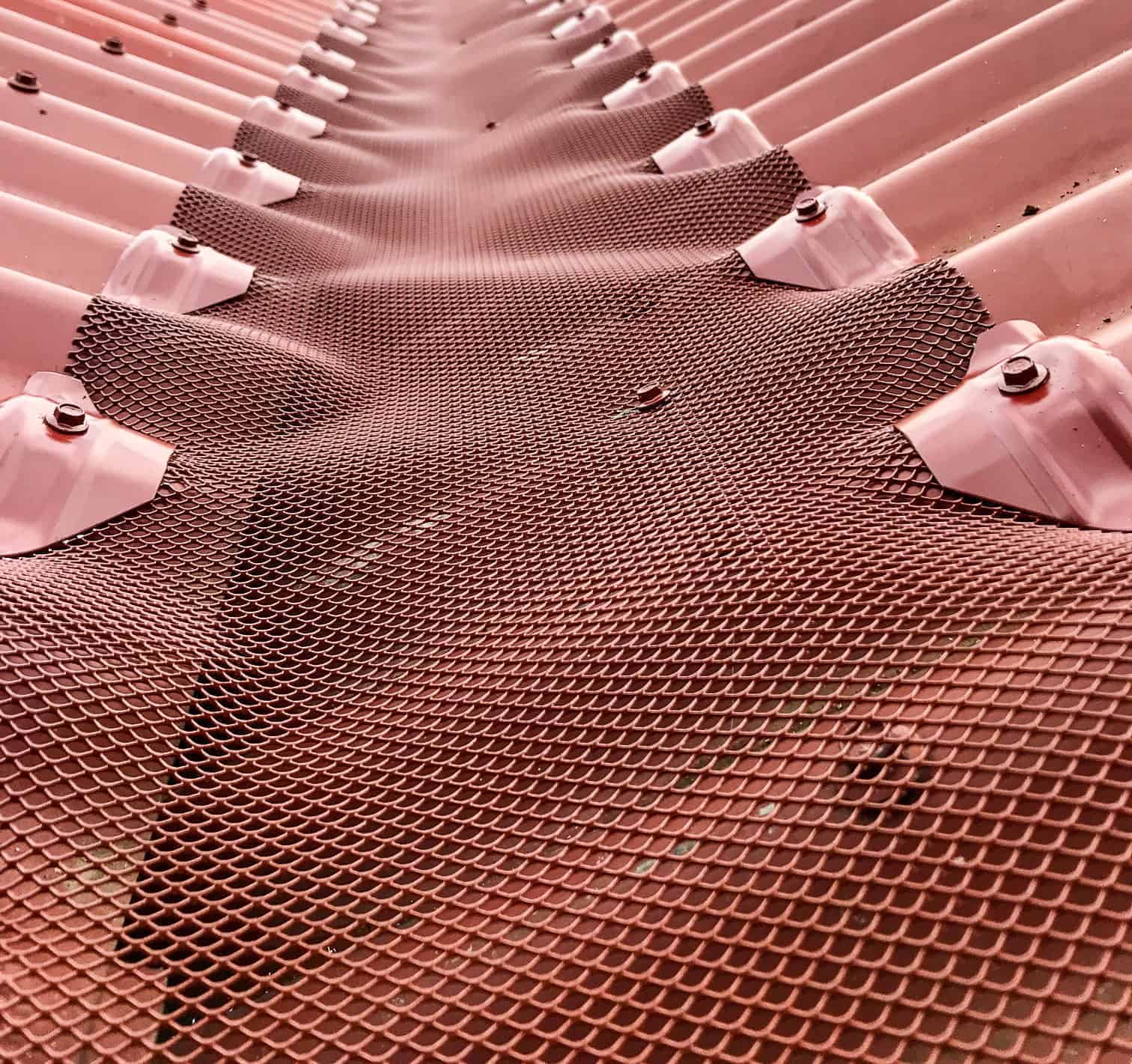
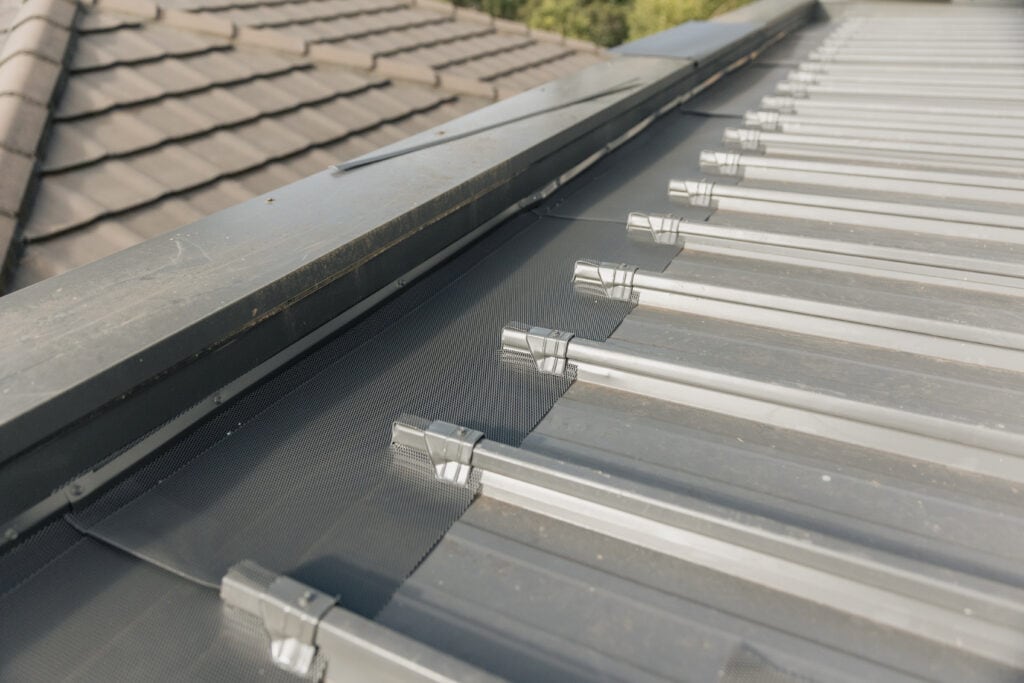
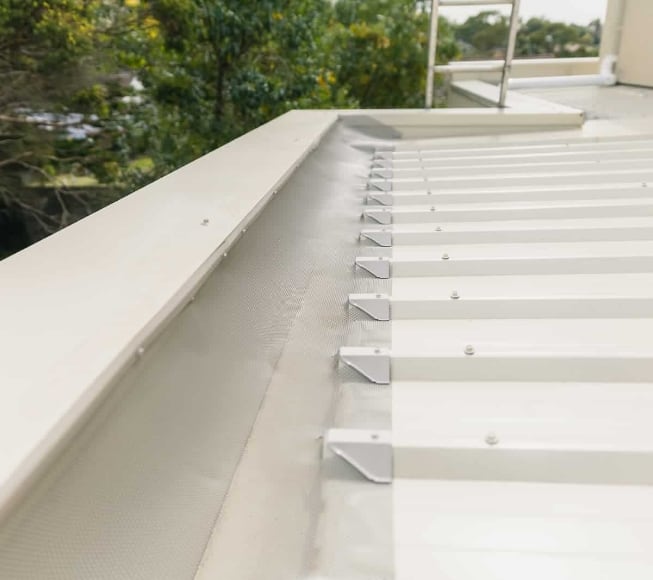
ember guard on klip-lok

Box gutters and parapet wall fixtures are different from your standard gutter systems as they are not visible at ground level, giving your property a sleek look. Box gutter protection is effective for residential, commercial and industrial buildings. However, their higher edges and unique dimensions make the gutter mesh more susceptible to sagging and lulls, reducing the guard’s effectiveness. Installers need to understand the difference in a box gutter guard install to require specialised systems to support their weight and debris, preventing blocked gutters.

The benefits of installing gutter guards on box gutters are numerous. They:

Need gutter guards installed 

Preparing for Gutter Guard Installation

Before proceeding with gutter guard installation, it’s important to evaluate the condition of your box gutters. Here are the steps to follow:

  1. Clear any debris from the gutters.
  2. Flush the entire system.
  3. Preparing the tools 
  4. Measuring the box gutter for mesh width and ordering materials 
  5. If you find significant faults in the gutters, consider replacing those sections before installing.

Safety is of utmost importance in this procedure. Always comply with local and state height safety measures and use appropriate equipment such as gloves, harnesses, and ladders. 

Necessary Gutter Cleaning Tools and Materials

The right tools and materials are paramount for a successful gutter guard installation. You will need:

  • Safety equipment, including gloves, harness, etc 
  • Gutter brush
  • Gutter scope
  • A hosepipe

Make sure to use a lightweight aluminium extension ladder for stability and maneuverability. Work gloves that offer good grip and protection against sharp edges are also advisable.

The role of a stiff brush in the gutter guard installation process is to:

  • Dislodge debris
  • Thoroughly clean the gutter before installing the guard
  • Ensure a clean surface for the gutter guard to adhere to
  • Catch and trap debris, preventing it from entering the gutter after the guard is in place.

Preparing Gutter Guard Tools

You will need additional tools for the installation, including: 

  • All necessary Safety equipment 
  • Gutter guard kit 
  • Tin snips
  • Electric screwdriver 
  • String line (works best for runs longer than 4 metres)
  • Silicone 

Measure the Gutter

Measuring box gutter for mesh width

Width Measurement

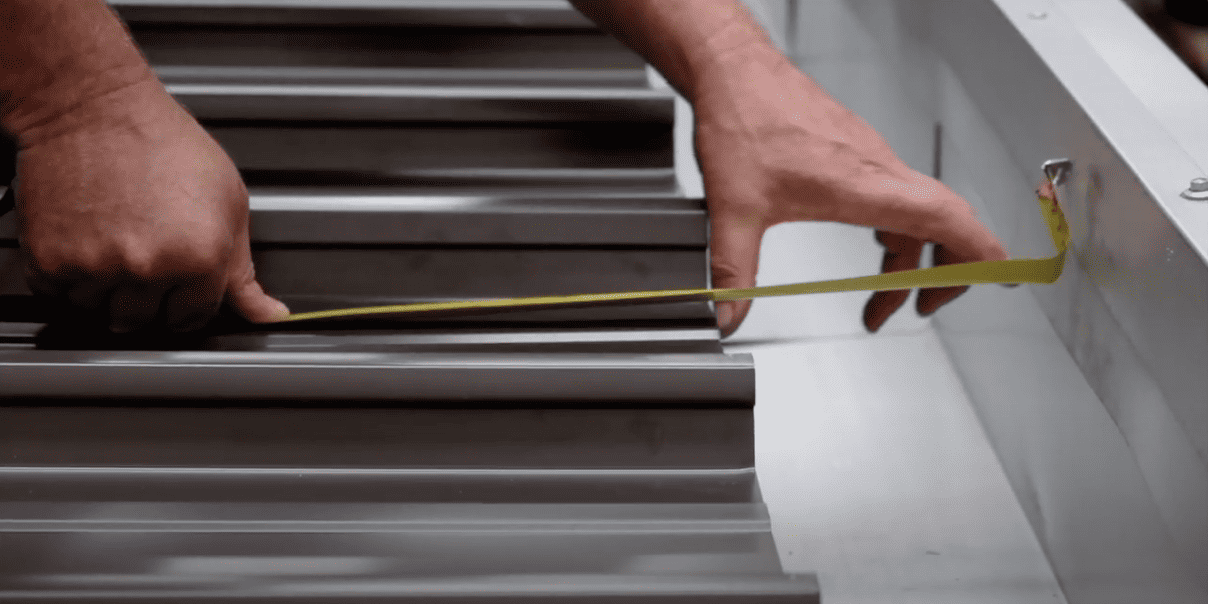
Measuring the width accurately is critical, especially with box gutters. The standard widths of 250mm and 500mm work for most kits, but precision is key for box gutters on a Klip-Lok® roof. To ensure you order the correct width, measure the distance from the box gutter wall to the roof. Add 100-150 mm where the mesh will sit on the roof and another 50mm where the mesh will sit flush up against the box gutter wall.

Length Measurement

Equally important is measuring the length of your gutter runs. This ensures you have enough mesh to cover the entire area. You can measure this from wall to wall along the gutter line. For a more tech-savvy approach, consider using satellite measuring tools like Near Maps, which provide precise aerial measurements.

Ordering Gutter Mesh

We always recommend ordering a minimum of 5 metres extra mesh beyond your measured length. This extra length accounts for any unforeseen adjustments or cuts you might need to make during installation. It’s better to have a bit more than you need than to fall short during the crucial stages of your project.

Determine the Trim Line

determine the trim line - box gutter installation

Measuring a straight line inside your box gutter or parapet wall is essential for a professional finish and efficiency. Place a flat trim against the roof to the box gutter and mark it on the wall. Add about 50 mm to that measurement and mark at regular intervals to give you your trim line. Continue to mark along the gutter run to ensure an even trim line.

Pin the Mesh

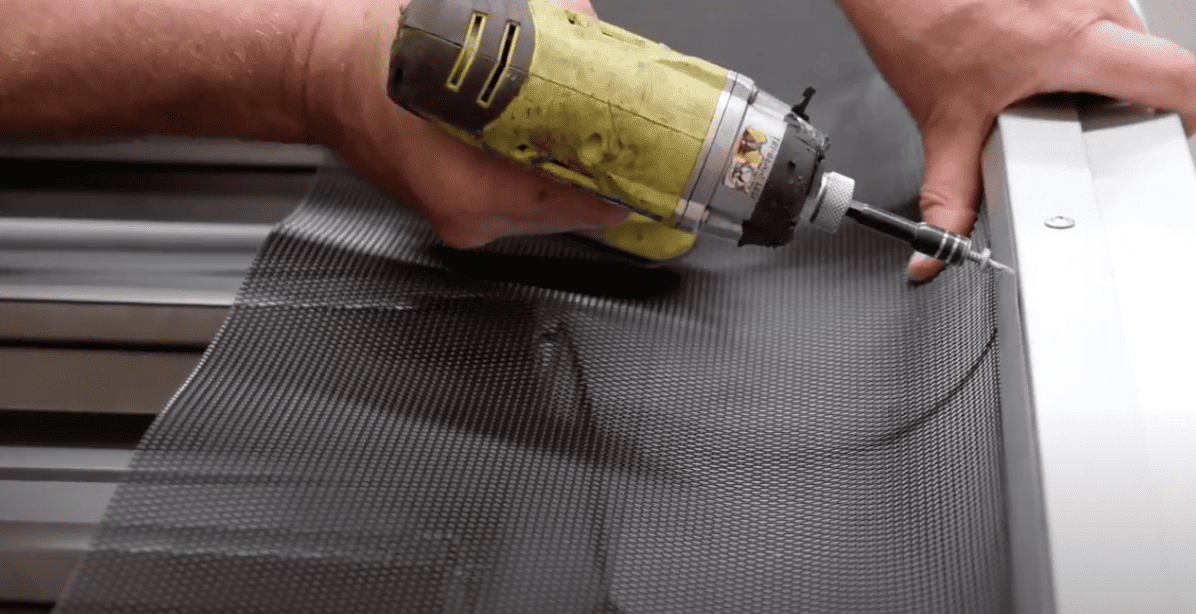
Pin the mesh just under your trim line to provide a starting point. Secure in place with a pinning screw. This initial step is crucial for aligning the mesh correctly and ensuring it stays in place during the rest of the installation.

Secure with Trims

Once the gutter mesh is pinned, it’s time to secure it with the flat trims. Remove any pinning screws and plug the holes with the silicone. Align the trims with your earlier markings, ensuring the mesh is neatly tucked underneath. Secure the trims with neoprene screws, which ensure a waterproof seal.

Important: Before removing any screws, fill in with silicone. At the end of the installation, run a bead of silicone across the top of the trim to ensure a waterproof seal.

Cut the Mesh Along the Ribs

Cut along the roof ribs

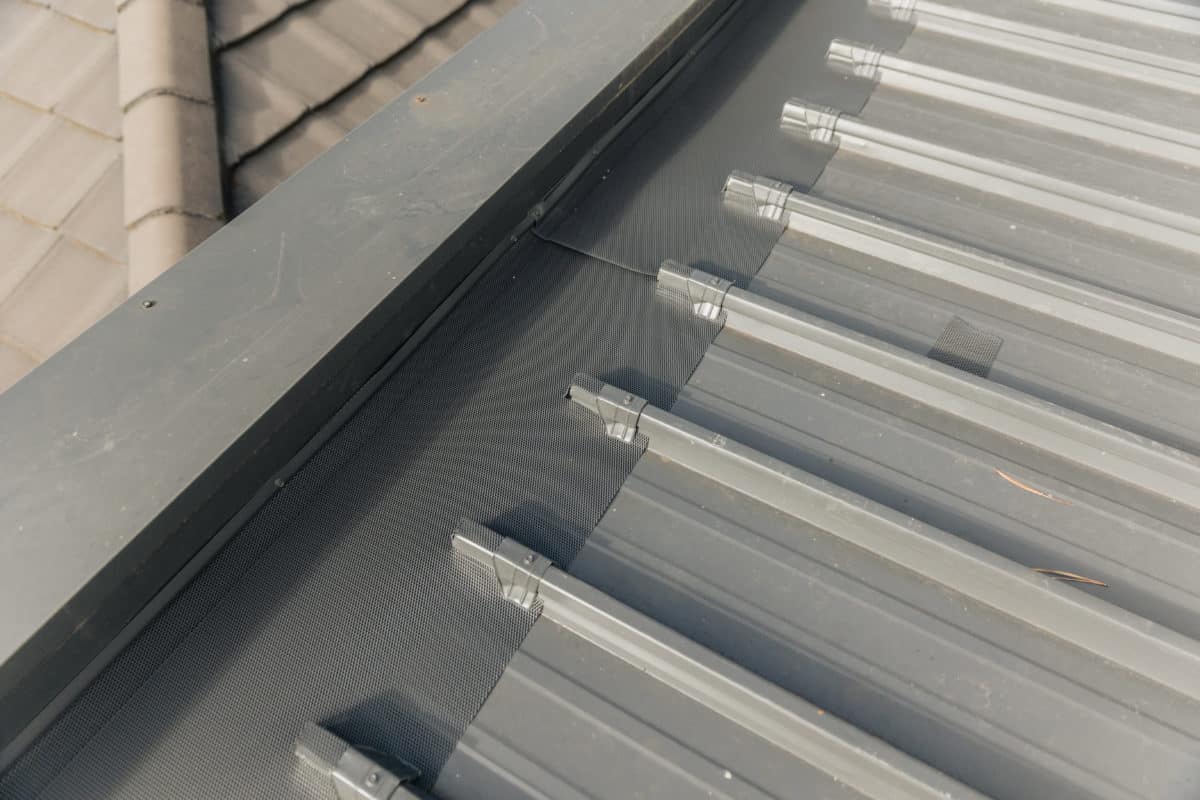
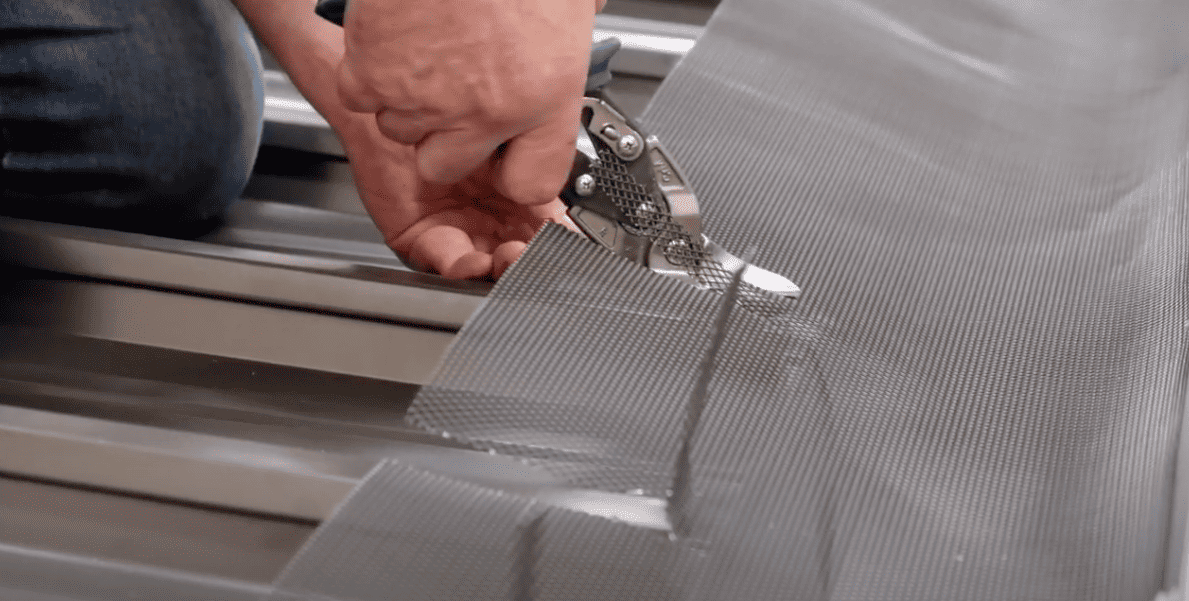
Cutting the mesh correctly is vital for a flat fit, preventing water build-up, and ensuring vermin and ember proofing. Screen Tech and our installation partners pioneered the tag method. Make two cuts down the top of each rib, stopping about 30mm from the edge, and then fan out towards the end, creating a flush tag with the roof pan.

Seal the Gutter Mesh with Clips

attach clips to gutter mesh and roof

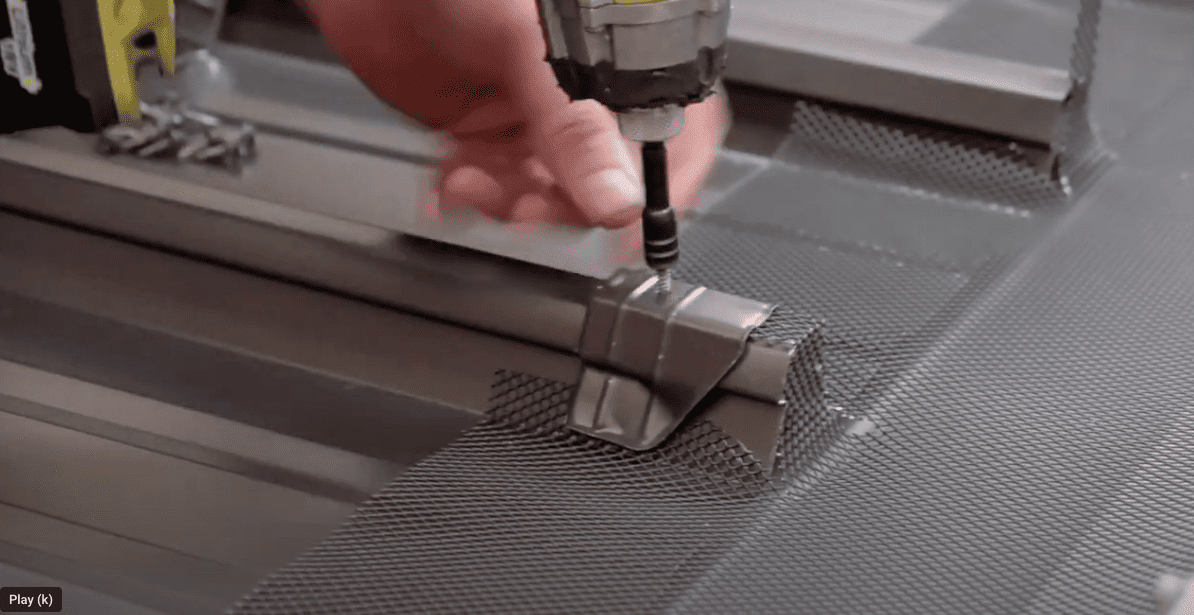
The final step is securing everything with clips. These clips play a crucial role in holding down the tags and ensuring a watertight seal. Align the screw hole with the mesh to strengthen the tag, then snap the clip into place.
Secure with a roofing screw; neoprene washer screws are not necessary as the clips provide a watertight seal.

Finalising the Gutter Guard System

With the gutter guards securely installed, it’s time to complete the gutter guard system installation. This involves ensuring proper water flow and achieving an aesthetically pleasing finish.

Ensuring Proper Water Flow

Maintaining proper water flow is vital for efficiently operating your gutter guard system. After installation, follow these steps to ensure proper water flow:

  1. Remove any loose debris from the gutters.
  2. Flush the gutters with water to test the flow.
  3. Observe if the water flows smoothly towards the downpipes.
  4. Check the underside of the gutters for any leaks or dripping water.

By following these steps, you can ensure that your gutter guard system is working effectively.

If you notice any water flow issues, it’s important to address them promptly. Here are some steps you can take:

  1. Adjust the positioning of the gutter guards if needed.
  2. Clear any debris blocking the gutter or downspout.

Need gutter guards installed 

Adapting the Process to a Parapet Wall

Installing gutter guards on parapet walls closely mirrors that of box gutters on Klip-Lok® roofs. The key principles of accurate measurement, secure pinning, precise cutting, and thorough sealing also apply here. For parapet walls, ensure that your measurements for width and length are exact, taking into account any unique contours or features of the wall. When pinning the mesh and fitting the trims, pay special attention to the alignment against the parapet wall, ensuring a snug fit that prevents debris accumulation and water ingress.


The final inspection is crucial to ensure that the gutter guard system is not only effectively installed but also complements the aesthetic of the parapet wall while offering robust gutter protection.

Selecting the Right Gutter Guards for Your Roof Type

Your roof type can significantly dictate the kind of gutter guard products appropriate for installation. Whether you have a:

  • Metal roof (Trimdek®, Klip-Lok® or corrugated roofs)
  • Slate roof
  • Flat roof 
  • Asphalt roof
  • Terracotta tiled roof
  • Tiled roof

It’s crucial to choose a gutter guard that is compatible with your specific roof type.

Colorbond gutter guard system

Compatibility with Metal Roof

For a metal roof, ensure the compatibility of your chosen gutter guards with the roof material. Using incompatible gutter guards can result in galvanic corrosion due to contact between different metals, which can weaken your roof and potentially cause leaks or damage.

When selecting gutter guards for metal roofs, consider the following factors:

  • The type of roofing system
  • The specific gutter guard product material
  • Design
  • Installation complexities
  • Higher edges 
  • Maintenance requirements

Klip-Lok® Roof Compatibility

Specialised gutter guards like the Klip-Lok® box gutter guard kits with custom clips are designed to offer a precise fit for specific metal roofing systems, ensuring compatibility and aesthetics. Screen Tech’s Supadek clip for Klip-Lok® roofs is also suitable for Lysaght® Klip-Lok®, Hi-Strength Lysaght® Klip-Lok, ® 406 Lysaght® Klip-Lok®, Classic Fielders KingKlip®, Metroll Metlok®, Revolution Revklip Stramit and Speed Deck Ultra®.

For Trimdek® or Spandek® roofs, see our Trimdek® gutter guard kits with custom clips.

Want to install our gutter guard?

Common Installation Mistakes and Their Solutions

Mistake 1: Incorrect Measurement

  • Problem: One of the most frequent errors is incorrectly measuring the gutter’s width and length. This can lead to inadequate coverage or excess material.
  • Solution: Always double-check measurements before ordering. For width, include additional space for the mesh to sit comfortably on the roof and against the box gutter wall. For length, use precise tools or digital measurement aids like Near Maps for accuracy.

Mistake 2: Inadequate Securing of Mesh

  • Problem: Please secure the mesh properly to avoid it sagging or detaching, especially in adverse weather conditions.
  • Solution: Ensure the mesh is firmly pinned at the start of the installation. When securing with trims, use silicone to plug any holes created by the removal of pinning screws, and align trims accurately with earlier markings.

Mistake 3: Overlooking the Importance of Trim Line

  • Problem: An uneven trim line can lead to poor aesthetics and functional issues in water flow and debris collection.
  • Solution: Use a flat trim to mark a straight line inside the box gutter or along the parapet wall. Ensure consistent marking at regular intervals along the gutter run for an even and effective trim line.

Mistake 4: Incorrect Cutting of Mesh

  • Problem: Improper cutting technique can lead to ineffective sealing, leaving room for debris accumulation and water pooling.
  • Solution: Adopt the ‘tag method’ pioneered by Screen Tech. Make two straight cuts along each rib, stopping short before the edge, then fan out to create a tag. This ensures a flat fit and effective vermin and ember proofing.

Mistake 5: Failing to Seal Screw Holes Properly

  • Problem: One common oversight is neglecting to fill screw holes, which can lead to leaks and potential water damage.
  • Solution: Whenever you remove or reposition screws during installation, it’s crucial to fill these holes with silicone immediately. This applies both to the initial pinning screws and any adjustments made during the fitting of trims. Ensuring all screw holes are properly sealed not only prevents water ingress but also maintains the structural integrity of the roof and gutter system. A thorough final check for unsealed holes is essential for a professional and reliable installation.

By being aware of these common pitfalls and their solutions, you can ensure a more efficient and reliable installation, reinforcing your reputation as a skilled and knowledgeable professional in this field.

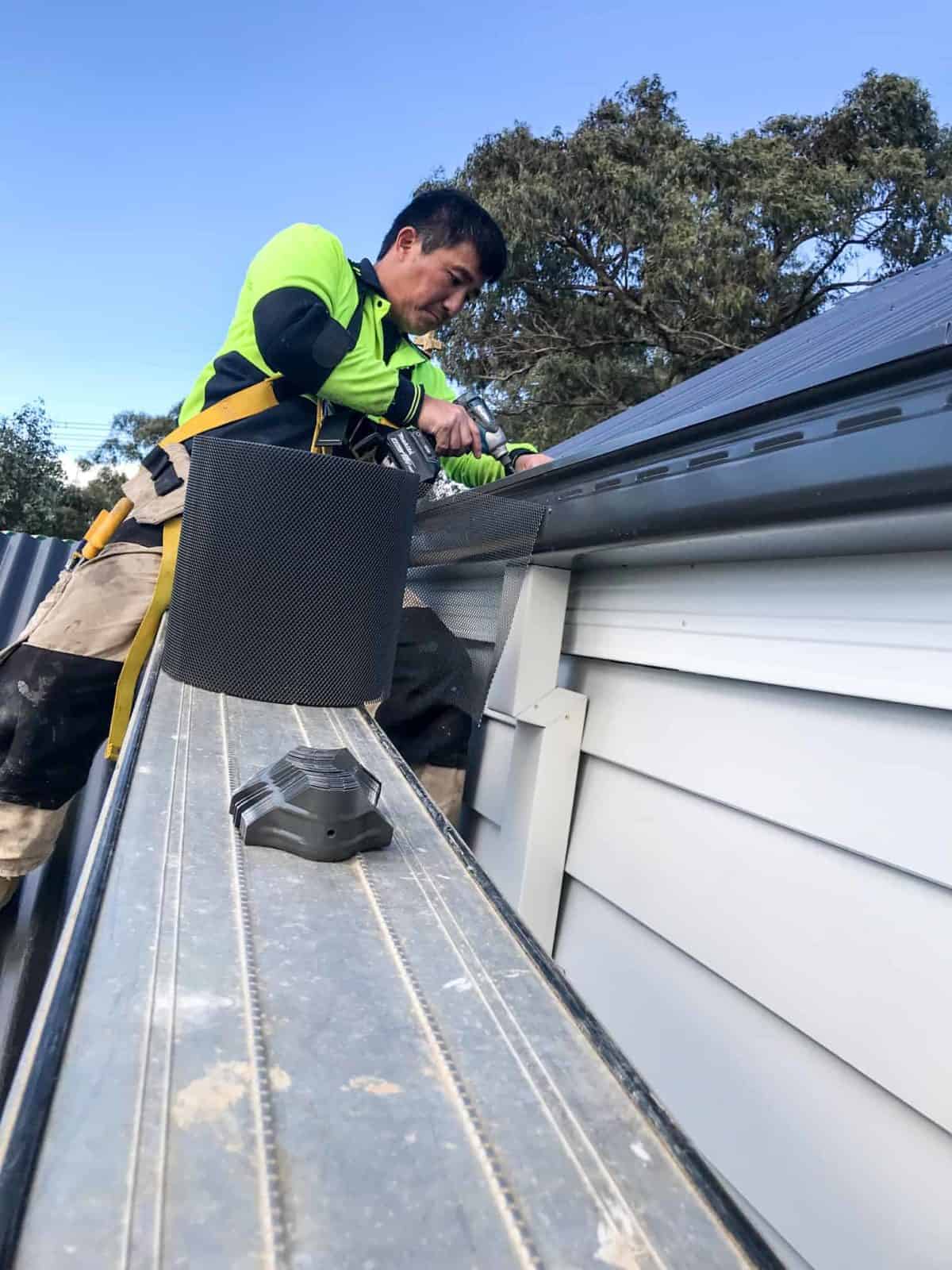
gutter guard installer at work

Maintenance and Longevity

The beauty of the gutter protection system is that it requires minimal maintenance once it is installed and offers a unique selling point for your customers. Here are some maintenance and longevity points you can share with your customers: 

  • Importance of Regular Maintenance: Regular maintenance is crucial to maximise the lifespan and effectiveness of gutter guards. Even the best-installed gutter guards can accumulate debris over time, which may affect their performance.
  • Schedule Regular Checks: It’s advisable to inspect gutter guards at least once a year – typically in spring and/or autumn when debris accumulation is likely to be highest.
  • Cleaning Process: Use a soft brush or blower to remove any debris sitting on top of the guards. Ensure that downspouts are straightforward to maintain proper water flow.

Regular maintenance and awareness of environmental impacts are vital to ensuring the longevity and effectiveness of your gutter guard system. By taking proactive steps in care and choosing the right materials, you can significantly extend the life of your gutter guards and maintain their protective qualities over the years.

Final Thoughts

In summary, properly installing and maintaining gutter guards on Klip-Lok® roofs and box gutters is crucial in safeguarding properties against water damage, debris accumulation, and potential fire hazards. As a tradesperson, architect, or builder, your ability to skillfully navigate these installations not only enhances the functionality of your projects but also contributes significantly to their overall aesthetic and longevity.

Remember, the key to successful gutter guard installation lies in attention to detail — from accurate measurement and correct placement to regular maintenance and timely repairs. Embracing these practices will ensure that your gutter guard systems perform optimally year-round, offering peace of mind to your clients and elevating the quality of your workmanship.

Our team at Screen Tech Gutter Guard is here to assist those looking to undertake box gutter projects, whether a residential home or a large-scale commercial building. With our extensive experience and a wide range of high-quality gutter guard solutions, we can help you navigate the complexities of any project.

Don’t hesitate to contact us for expert advice and support on your upcoming box gutter project.

Frequently Asked Questions

Can you install gutter guards on existing gutters?

Yes, you can install gutter guards on existing box gutters. It is easy to install on new homes as the scaffolding makes the installation process easier. However, you can install these systems from the roof with the correct safety measures. 

How do I stop my box gutters from overflowing?

To prevent box gutters from overflowing, consider installing gutter guards or gutter mesh covering to keep leaves and other debris out and allow water to flow freely.

Can you install an ember guard to a box gutter?

Yes, you can use the same installation process for ember guard installations to protect against ember attack, keep fine leaves and other debris out and allow water to flow freely.

Are box gutter protection systems better than other gutter guard products?

A box gutter protection system is more effective than other gutter guard products, such as brush gutter guards, foam gutter guards or other metal guards, as they span across the entire gutter. 

Can you install it to the gutter’s edge?

Yes, in some cases where the slope is lower than the gutter’s higher edge, installing the mesh to the gutter’s edge provides a better slope that will encourage leaves to fall to the ground and prevent water pooling. 

Are box gutter guards suitable for all gutter guard solutions? 

Yes, box gutter guards are versatile and suitable for multiple applications. They effectively prevent birds from nesting and block debris like leaves, making them great for leaf-proofing. They offer ember-proofing for areas at risk of bushfires, especially when made of fire-resistant materials. Additionally, they facilitate rainwater harvesting by keeping gutters clear, ensuring cleaner water collection.

Want to know more? ScreenTech sends out Colorbond® gutter guard samples and guides to architects and discusses projects and considerations.

Look no further than ScreenTech’s TuffMesh®, GutterMesh, SteelMesh and SolarMesh products. Our mesh suits Klip-Lok®, Timdeck® corrugated roof types and tiled roofs. Get in touch with a ScreenTech installation partner today.
Categories
Blog

Super-Dek Klip-Lok® Roof Clip | Gutter Guard Game-changer

Gutter protection has always been at the forefront of Australian architectural designs, especially with our country’s unique climate and the predominance of distinctive roofing styles, notably the Klip-Lok® design. With the increasing intricacies of new builds and a heightened demand for modern and resilient roofing solutions, it’s evident that a more advanced solution for gutter protection was needed.

Enter the Supa-Deck Klip-Lok® Clip—a product birthed from addressing the nuanced challenges specific to Australian roofing and setting a new gold standard in gutter protection.

ember guard on klip-lok

Addressing Australian Klip-Lok® Roof Challenges

The Klip-Lok® design, quintessentially Australian, has been widely adopted due to its durability and sleek aesthetics. However, such roofs have unique challenges, especially in ensuring that gutter protection meets Australian standards and requirements.

Traditional gutter protection solutions often have issues due to non-compliance or sheer inefficiency in design. Recognising this gaping need in the market, thorough R&D went into the conceptualisation and creation of the Supa-Deck Klip-Lok® clip.

Need gutter guard installed?

Technical Superiority and Applicability

Supa-Deck Klip-Lok® clip isn’t just another product; it embodies technical superiority tailored to the needs of roofers, trades and architects. The clip’s design ensures seamless accommodation of diverse Australian roofing structures, box gutters or the standard Klip-lok rows.

What truly stands out is the snap-fix design. With strategic placement, a single screw ensures the mesh remains firmly anchored, providing robust protection to the gutters. The design promises efficiency and cuts installation time—a boon for tradespeople often grappling with tight schedules.

Klip-lok gutter guard clip

Roof Compatibility

  • Lysaght® Klip-Lok® Hi Strength
  • Lysaght® Klip-Lok®  406
  • Lysaght® Klip-Lok® Classic
  • Fielders KingKlip®
  • Metroll Metlok®
  • Revolution Revklip
  • Stramit Speed Deck Ultra®

Features and benefits:

  • Double-ribbed
  • CSIRO tested and endorsed
  • Complies with AS3959 – 1999
  • Akzo Nobel D1010 powder coating
  • Aluminium

Need gutter guards installed 

Innovation & Reinvention of Clip Design

Traditional solutions in the Australian market often lean towards heavier gauge materials as a makeshift solution to fortify their products. However, this approach, although providing strength, often compromised on flexibility—a pivotal aspect considering the diverse roof shapes inherent to Australian designs.

The Supa-Deck Klip-Lok® clip took a different route. Instead of merely bolstering the material, the design incorporated an innovative rating system. This move resulted in dual benefits. First, it enhanced the structural strength of the clip, ensuring longevity and durability. Simultaneously, it preserved the clip’s flexibility, allowing it to adapt seamlessly to various roof contours. This holistic approach underscores a comprehensive understanding of tradespeople and architects’ real-world challenges and attempts to address them head-on.

Why It Matters to Tradesmen & Architects

In the fast-paced world of construction and design, efficiency, reliability, and compliance are non-negotiable. A gutter guard system with the Supa-deck Klip-Lok® clips in our gutter guard system checks all these boxes.

For tradespeople, the system promises reduced installation time without compromising the quality of the final output. Its adaptability ensures that a single, reliable solution can address diverse roofing styles.

On the other hand, architects can now promise their clients a roofing solution that looks good and boasts cutting-edge functionality. The reliability and longevity offered by the system mean fewer maintenance calls and enhanced client satisfaction.

To our fellow tradespeople and esteemed architects, experience firsthand the confluence of design, efficiency, and durability in our Klip-Lok® gutter protection system with the Supa-Deck Klip-Lok® clip.

Want to know more? ScreenTech sends out Colorbond® gutter guard samples and guides to architects and discusses projects and considerations.

Look no further than ScreenTech’s TuffMesh®, GutterMesh, SteelMesh and SolarMesh products. Our mesh suits Klip-Lok®, Timdeck® corrugated roof types and tiled roofs. Get in touch with a ScreenTech installation partner today.

Categories
Blog

Australia’s 10 Worst Gutter Guards to Avoid

Gutter guards are crucial for reducing gutter cleaning and protecting from debris, leaves, and pests that cause clogged gutters. Choosing the right gutter guard is essential for optimal performance.

In Australia, unpredictable weather is the norm; providing homeowners with effective gutter guards is even more vital. However, assisting homeowners in choosing the right gutter guard system is challenging, even for the best roofing contractors and gutter guard installers, as the market is saturated with inferior gutter guard types.

This article reveals the ten worst gutter guards homeowners should avoid, including an in-depth analysis of their limitations. Roof contractors & gutter guard installers use this information to empower your customers to choose an effective gutter guard solution for their gutter system.

Read: Best Gutter Guard in Australia: Ultimate Guide

What are the worst gutter guards in Australia?

  1. Generic Micro-mesh Gutter Guards
  2. Stainless Steel Mesh Panels
  3. Brush Gutter Guards
  4. Foam Inserts
  5. Plastic Mesh Covers 
  6. Leaf Guards for Solar Panels 
  7. Gutter Guard Downpipe Covers
  8. Plastic Ember Mesh
  9. Screen Guards
  10. DIY Kits with Insufficient Materials

1. Generic Micro-Mesh Gutter Guards

Colorbond gutter guard system

While micro-mesh gutter guards are touted as one of the best options for preventing debris from entering your gutters; not all are created equal. 

Most micro-mesh guards refer to gutter guards commonly used in America as a solution for pine needles and fine debris. These gutter guards do not convert to Australian gutter systems; Australian and American gutter systems differ in materials, size & shape. 

Generic or low-quality micro-mesh gutter guards often have flimsy frames and inadequate mesh, which allow debris to enter and rust over time. Additionally, water sheeting issues are common with micro-mesh gutter guards, as smaller holes prevent heavy rainfall from entering the rain gutters, instead sheeting over the guards and seeping into foundations. 

Some people in Australia refer to ember guards as micro-mesh gutter guards. Ember guards have specified hole sizes of less than 2mm to protect from burning embers and pine needles. ScreenTech’s ember guards have directional holes and a water trough to prevent water sheeting and promote optimal water flow. 

Read: Best Gutter Guard For Pine Needles

See our TuffMesh® range.

2. Stainless Steel Mesh Panels

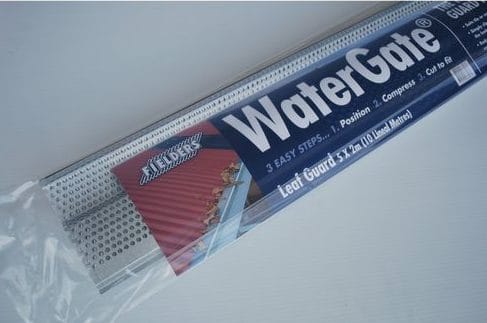
Fielders Watergate Leaf Guard

Steel is a highly effective and durable material in gutter protection, and Colorbond® Steel ember guards are specified for extreme bushfire protection areas. However, stainless steel gutter guard systems are cheap leaf guards with inferior grades of stainless steel; therefore could be more effective. 

Stainless steel gutter guards are often uncoated, meaning they corrode quickly. They bend and reshape under weight and pressure, making them unsuitable for homes with possum activity or surrounded by trees with large branches, including gum trees. 

Mesh panels or gutter covers sit above the gutter edge, making them dangerous in areas of Australia prone to strong winds or tropical storms. For these reasons, mesh panels are one of the worst gutter guards in Australia. Mesh panels come in predefined widths and lengths for standard gutters and may include fasteners. 

Read: Steel vs aluminium gutter guards | What’s best? 

3. Brush Gutter Guards

brush gutter guard

Brush gutter guards are cylindrical wires with perturbing bristles placed inside gutters to trap leaves and other debris while promoting water flow. Brush guards are effective bird-proofing measures against smaller birds nesting in the gutters and are easy to install. However, leaves often clog in the bristles requiring frequent maintenance and gutter cleaning. 

While they can protect against smaller birds like mynas, larger birds, including gulls and pigeons, can easily remove them. Clogged brush guards also attract other unwanted pests, such as insects and vermin. Furthermore, they are unsuitable in bushfire-prone areas or homes with water tanks for potable water use, as they need to meet Australian Standards. 

For these reasons, brush guards are one of the worst gutter guards in Australia

Read: Do all new homes need bird proofing?

Order a sample pack with commercial and standard gutter mesh samples. 

4. Foam Inserts

foam gutter guard

Foam inserts are made from porous foam, designed to fit inside your gutters to block leaves and allow water to pass through. Though it seems like an easy solution, foam inserts are one of the worst gutters with a limited lifespan, limited solution options and require more maintenance than other guards.

Contrary to the idea of a low-maintenance solution, foam gutter guards can require frequent cleaning as debris tends to accumulate on top of them. Foam guards have a limited lifespan, and exposure to the elements can cause them to break down and become brittle; the process is accelerated with high UV exposure.

During heavy rainfalls, foam gutter guards might not be able to handle the volume of water, which causes it to swell, leading to the gutters warping or pulling away from the house or potential overflow issues, potentially damaging your home’s foundation and landscaping. The foam can create a damp and sheltered space, which may become a breeding ground for insects and pests like mosquitoes. In areas prone to bushfires, foam gutter guards pose a fire hazard as the material is flammable and can catch embers.

Read: Bunnings Gutter Guard Range Review 

Order a sample pack with commercial and standard gutter mesh samples. 

5. Plastic Mesh Covers

Bunnings Whites StayMesh

Plastic covers are a budget option found in stores like Bunnings. Plastic covers typically feature UV-stabilised materials and are often coated in black PVC. Plastic mesh is the least durable mesh compared to steel and aluminium. However, it is preferred for coastal home applications or galvanised roof applications.

Plastic covers make our list of the worst gutter guards as they become brittle and break with UV exposure. Unless professionally installed by a gutter guard installer, flexibility means they can sag and collect debris instead of protecting the gutter.

Read: A Comprehensive Guide to Plastic Mesh Gutter Guard 

Need gutter guard installed?

6. Leaf Guards For Solar Panels

Leaf guards are unsuitable for solar panel protection as the small hole size reduces light penetration and increases moisture under the panels, leading to corrosion and affecting the panel’s effectiveness. Installing gutter mesh around the panels can interfere with the mounting hardware and potentially damage or jeopardise its stability.


For solar panel protection, Screen Tech recommends our solar mesh kits.

7. Gutter Guard Downpipe Covers

The primary purpose of downpipe covers is to prevent clogs by stopping leaves and debris from entering the downpipes. Cheap gutter guard downpipe covers can be easily dislodged by wind or clogged, making them ineffective.

Read: 5 Best Gutter Guards for Stratco Gutters

Need gutter guard installed?

8. Plastic Ember Mesh

Plastic ember mesh is specified ember guard and is instead only plastic covers. Ember guards must be aluminium or steel to meet specifications. These products make our list of the worst gutter guards because plastic leaf guards cannot be used for ember protection.

Read: Does plastic ember guard work?

9. Screen Guards

Screen gutter guards prevent leaves from entering and clogging the gutters. These guards are typically made of stainless steel or plastic and feature a mesh or screen with holes. They clip inside the gutters, allowing water to pass through into the gutter while blocking larger debris.

The hole size in the screen can vary, but most screen guards have relatively large openings allowing smaller debris such as pine needles and seeds. The design of these screen guards often requires removing the guards to clean the gutters. The process of locking and unlocking them for maintenance can be cumbersome and can also wear out the locking mechanism over time.

10. DIY Kits with Insufficient Materials

Gutter guard systems kits are sold as DIY or for wholesale professional installation. Many DIY kits must include more materials, have vague instructions, or are made with subpar materials. This leads to improperly installed or ineffective gutter guards.

Gutter guard kits should include the following: 

  • Gutter mesh (Colorbond® roof colours) 
  • Gutter trims (colour-matched to gutters) 
  • Roof profile/colour-matched gutter saddles/clips (not necessary for tile roof)
  • Colorbond® Roofing Screws

Read: Ultimate Colorbond Gutter Guard Guide 

When protecting homes, homeowners must invest in high-quality gutter guards. Avoiding these ten options and opting for a well-reviewed, reputable brand will save you time, money, and potential damage in the long run. Consult a professional for advice on your home’s best gutter guard system.

At Screen Tech, we firmly recommend an integrated mesh system as the most effective and durable gutter guard solution.

Want to know more? ScreenTech sends gutter guard samples and guides to architects and discusses projects and considerations.

ScreenTech’s TuffMesh® range is the best commercial-grade gutter guard in Australia. It is only available for professional installation and not as a DIY option.

Use our gutter guard estimation services to quote your next project, or call our expert team for advice and assistance for your gutter guard job.

Look no further than ScreenTech’s TuffMesh®, GutterMesh, SteelMesh and SolarMesh products. Our mesh suits Klip-Lok®, Timdeck® corrugated roof types and tiled roofs. Get in touch with a ScreenTech installation partner today.

Categories
Blog

Best Gutter Guard for Pine Needles in Australia (2023 Guide)

As a wholesale supplier of gutter guards to roofing companies and tradespeople, we understand the challenges of maintaining gutter systems in areas with high pine needle accumulation. Whether your clients are commercial or residential, providing them with a practical and durable gutter guard solution is crucial for maintaining gutter health and preventing potential water damage or bushfire protection.

In this article, we’ll discuss why the ember guard is the best gutter guard product for pine needles in Australia and compare various gutter guard types, including ember guard systems, integrated micro-mesh gutter guard systems, gutter screens, brush gutter guards, vinyl gutter guards, and foam gutter guards.

Read: Best Gutter Guard in Australia | Ultimate Guide

Need gutter guard installed?

What is the best gutter guard for pine needles in Australia?

Ember guards are the best gutter guards for pine needles for Australian homes. They are designed explicitly with hole size specifications to provide optimal gutter protection against burning embers, extending to pine needles and other tiny debris. The primary reason for their effectiveness lies in the small aperture size, usually around 1.9mm or 2mm, depending on the specific product. An ember guard system uses the roof’s pitch to create a ski slope effect, allowing leaves and debris to fall to the ground while keeping the gutters clear.

Pine Trees Are a Leading Cause of Clogged Gutters

There are several benefits for gutter guards, but one primary solution is leaf guard against pine needles. Pine needles can be an issue for gutters in Australia for several reasons:

  1. Clogging: Pine needles are narrow and long and can quickly accumulate in gutters, causing blocked gutters. These clogs can obstruct the water flow, leading to water overflow, which can cause damage to the property’s foundation, fascia, soffit, and other structures.
  2. Bushfire hazard: In areas prone to bushfires, accumulating pine needles and other dry debris in gutters can pose a significant fire hazard. Embers from nearby fires can easily ignite the dry pine needles, leading to the rapid spread of fire to the roof and the rest of the property.
  3. Moisture retention: Pine needles can trap moisture in the gutters, which may lead to rust and corrosion, reducing the lifespan of the guttering system. Additionally, the trapped moisture can create an ideal environment for mould, mildew, and algae growth, which can cause further damage to the property and pose health risks.
  4. Pest attraction: Combining pine needles and other organic debris in gutters can create a suitable habitat for pests, such as insects, rodents, and birds. These pests can cause damage to the property, and some may carry diseases that pose a risk to human health.
  5. Increased maintenance: The presence of pine needles in gutters can increase the frequency of cleaning and care required to keep the guttering system functioning efficiently. This can be both time-consuming and costly for property owners.

To mitigate these issues, it is essential to install gutter guards, such as ember guards or micro-mesh guards, designed to keep pine needles and other small debris out of the gutters. These systems can help protect properties from the potential damage caused by pine needles and reduce the need for frequent gutter cleaning and maintenance.

Read: 5 Best Gutter Guards For Stratco Gutters Australia-wide

Best Gutter Guard for Pine Needles Comparison

Ember Guard

Ember guard products are widely regarded as the best gutter guards for pine needles due to their small hole size and effectiveness at keeping out debris. Ember guards are designed explicitly with hole-size specifications to provide optimal gutter protection against pine needles and other fine debris. The primary reason for their effectiveness lies in the small aperture size, usually around 1.9mm or 2mm, depending on the specific product.

The small hole size ensures that even the tiniest debris, such as pine needles, cannot pass through and enter the gutters. At the same time, it allows maximum water to flow through during heavy rainfall, ensuring efficient water collection and minimising the risk of gutter blockages.

In addition to their small aperture size, ember guards are typically made from high-quality, durable materials such as powder-coated aluminium or stainless steel mesh. The aperture size ensures they can withstand harsh weather conditions, including extreme heat, high winds, and heavy rain while maintaining their effectiveness at keeping out pine needles and other debris.

ember guard on klip-lok

Moreover, ember guards are designed to provide additional protection against ember attacks during a bushfire, particularly in bushfire-prone areas. They help prevent the accumulation of combustible material, such as pine needles, in the existing gutter system, which could contribute to ignition in the case of ember attacks. Ember guards safeguard properties from potential fire risks by keeping pine needles and other small debris out of the gutters.

Another reason ember guard products are favoured in Australia is their adaptability to various gutter sizes and types. Their compatibility with a wide range of gutters, including box gutters and parapets, makes them a versatile choice for tradespeople and roofing companies.

Additionally, ember guard products like TuffMesh Emberguard are manufactured with commercial-grade standards, ensuring robustness and resistance to extreme weather conditions. These gutter guards are also powder-coated to prevent rusting and corrosion, which is crucial in maintaining their performance in coastal areas with high salt concentrations.

Read: Can you use ember guards for solar panel protection? 

integrated gutter mesh on valley roof

Ember guards are functional and aesthetically pleasing, available in multiple Colorbond® and tiled roof colours to seamlessly blend with various roof types, tile and metal roof designs. This attention to detail enhances the overall appeal of properties while providing essential protection against debris accumulation. Furthermore, ember guard products cater to clients’ diverse needs by offering DIY and professional installation options, ensuring the best fit for each project.

The best gutter guards for pine needles also consider recommending valley protection, especially for properties surrounded by trees. Only micro-mesh gutter guards installed in a system will effectively protect the valley.

Read: Do plastic ember guards work? 

Need gutter guards installed 

Integrated Micro-Mesh Gutter Guard Systems

gutter guard installation

Integrated micro-mesh gutter guard systems, also known as leaf guards, are similar to ember guard systems but typically have larger holes or gaps for better water flow. Micro-mesh guards are manufactured in food-grade polyethylene, powder-coated aluminium or stainless steel gutter guard materials to prevent rusting and corrosion.

Like ember guard systems, integrated micro mesh gutter guards are favoured in Australia due to their adaptability to various roof types, gutter sizes and gutter types. Their compatibility with a wide range of gutters, including box gutters and parapets, makes them a versatile choice for tradespeople and roofing companies.

Integrated micro-mesh gutter guards can be manufactured with commercial-grade standards; the best gutter guard for commercial projects or properties threatened by falling large debris, such as gum trees.

integrated gutter guard

Micro-mesh gutter guard systems are functional and aesthetically pleasing, available in multiple Colorbond® and tiled roof colours to blend with various roof designs seamlessly. This attention to detail enhances the overall appeal of properties while providing essential protection against debris accumulation. Furthermore, gutter guard systems cater to new build properties, as tradespeople can use scaffolding and build-site accessibility. Professional installation to new homes can be more challenging due to height safety and accessibility issues.

Many homeowners will also benefit from the extended product warranty for gutter protection from professionally installed gutter guards. A high-quality gutter guard company will also provide workmanship guarantees. The easy installation process of these gutter guards will not affect any existing roof warranty.

Choosing between a gutter and an ember guard system depends on your client’s needs, such as debris types and bushfire risks.

Read: Difference Between Ember Guard and Gutter Guard

Want to become a gutter guard installation partner?

Mesh Panels

gutter covers

Gutter screens, gutter covers or screen guards are designed to fit over the top of gutter systems and keep out debris such as pine needles. They come in various materials and hole sizes, with smaller holes providing better protection against pine needles. The least durable material is stainless steel products, including stainless steel micro mesh products, due to their susceptibility to rust and corrosion. Instead of the stainless steel micro-mesh products or plastic gutter filter products, consider powder-coated aluminium or zincalume Colorbond® steel. 

Most screen gutter guards are DIY-friendly and do not require professional installation from gutter guard companies. However, some gutter screens may not be specifically designed to handle pine needles, which can lead to clogs and blockages.

mesh panel

Gutter screens that sit over the gutters and create a flat surface are not as effective for pine needle protection for several reasons:

  • Large hole sizes: Most gutter guards will detail the aperture size. You want to ensure you get smaller aperture sizes for pine needles. 
  • Accumulation of debris: Flat surfaces can encourage the accumulation of pine needles and other debris on top of the gutter guard. The needles can clump together and form mats that block water flow, rendering the gutter guard ineffective.
  • Water overflow: As pine needles and debris build up on the flat surface, they can obstruct the flow of water, causing it to overflow the gutter system. This overflow can lead to water damage to the property’s foundation, fascia, soffit, and other structures.
  • Increased maintenance: Gutter covers require frequent cleaning and maintenance to remove accumulated pine needles and debris. It can be time-consuming and costly for property owners.

Read: Bunning’s Gutter Guard Range Review 

Brush Gutter Guards

Screenshot-2020-02-11-at-11.06.02-1

Brush gutter guards feature bristles or brushes inserted into the guttering to create a barrier against debris such as pine needles. They typically require medium maintenance and do not need professional installation. Brush guards are easily found from DIY gutter guard providers such as Bunnings.

brush gutter guard

The drawbacks of brush gutter guards and pine trees are ineffective filtering, limited durability and high maintenance. Consider these drawbacks in more detail: 

  • Infection filtering: The gutter guard’s design features upright bristles, allowing water to flow through while blocking larger debris. However, pine needles are thin and can easily slip between the bristles, accumulating in the gutter and potentially causing blockages. The gutter guard design can lead to reduced water flow, damage to the gutter system, and increased maintenance.
  • Limited durability: Brush gutter guards may not be as durable as most gutter guards. Over time, the bristles can become bent or damaged, compromising their effectiveness in removing debris, including pine needles. 
  • High-maintenance: Brush gutter guards can require more frequent maintenance than other gutter guard options, especially when dealing with pine needles. As the needles can get caught between the bristles, they may need to be removed manually, which can be time-consuming and labour-intensive. Brush guards can be a significant drawback for homeowners looking for a low-maintenance solution to protect their gutters from pine needles and other debris.

Need gutter guard installed?

Foam Gutter Guards

foam gutter guard

Foam gutter guards work when inserted into gutters to create a barrier that prevents debris, such as pine trees, from entering existing gutters. These gutter guards are cost-effective but may require regular replacement to avoid pest attraction or added weight on the gutters. Typically, foam strips are available at Bunnings stores and do not need professional gutter guard installers.

Foam inserts are less effective against pine needles than metal gutter guards because they create a flat surface for accumulating debris. Pine needles clump together and accumulate on top of the guard and cause several issues, including:

  • Blockages: The accumulation of pine needles on the foam guards can lead to blockages, preventing water from flowing through the gutters effectively. This can result in water overflow, causing damage to the property’s foundation and other structures.
  • Strain on the Gutters: As the pine needles clump and accumulate on top of the foam guards, they can add significant weight to the gutters. This increased weight can cause strain on the gutters, potentially leading to damage and costly repairs.

Considering these factors, foam guards are not the best gutter guards for dealing with pine needles. Homeowners and commercial properties seeking a more effective and long-lasting solution should consider other gutter guard options, such as ember or micro-mesh guards.

Reverse Curve Gutter Guards

vinyl guards or reverse curve gutter guards

Reverse curve or surface tension gutter or vinyl gutter guards feature a curved surface that directs water into the gutters while deflecting debris away. The curve’s angle allows water to flow into the gutter while creating a barrier against debris.
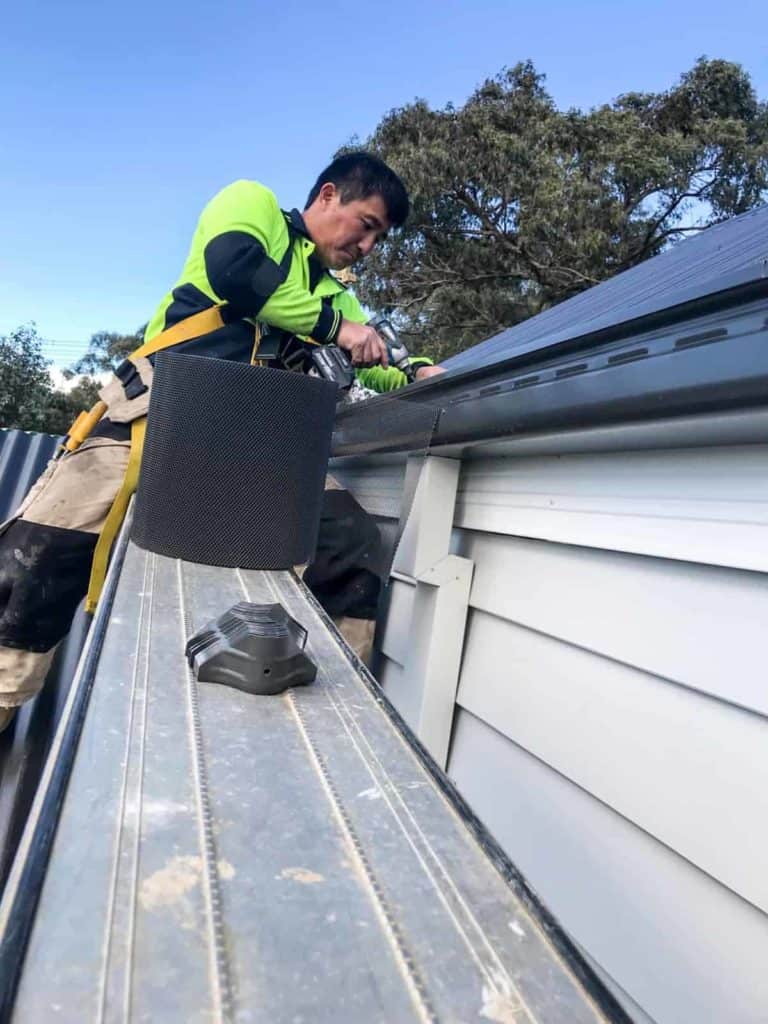
As water flows down the roof and onto the gutter guard, surface tension causes the water to adhere to the curve and flow into the gutters, while debris, such as pine needles, is deflected and falls to the ground. Reverse curve gutter guards are a low-maintenance solution for gutter protection but can be more expensive than other gutter guards and require professional installation.

reverse curve gutter guards

Want to become a gutter guard installation partner?

Best Ember Guard Products in Australia

TuffMesh™ Emberguard

Ember guard is designed for bushfire prone areas subject to heavy ember attack with the smallest appeture size at 1.6mm aperture. The small hole size also makes it ideal to filter fine debris including pine trees and jacarandas. The mesh strength makes it ideal for possums, bird and vermin proofing, but still works during heavy downpours to ensure maximum water collection.

applications

Ember guard is designed for bushfire prone areas subject to heavy ember attack with the smallest appeture size at 1.6mm aperture. The small hole size also makes it ideal to filter fine debris including pine trees and jacarandas. The mesh strength makes it ideal for possums, bird and vermin proofing, but still works during heavy downpours to ensure maximum water collection.

Specifications

  • LWG: 6.0mm
  • SWG: 3.0mm
  • Aperture: 1.6mm (average hole size)
  • Plate thickness: 0.8
  • Strand width: 1.2mm
  • Aluminum mesh

Features and benefits:

  • Strongest aluminium guard
  • One way mesh with added trough for maximum water collection
  • Complies with AS3959–1999
  • Australian Bushfire Standards
  • CSIRO tested flammability index of zero
  • Suitable to BAL 29
  • Akzo Nobel D1000 powder coating.
  • Powder coated in Australia
  • 25 year material warranty

Colour Options:

Basalt®

Classic Cream

Cottage Green®

Dark Brown

Deep Ocean®

Dune®

Evening Haze®

Gully®

Ironstone®

Jasper®

Manor Red®

Monument®

Night Sky®

Pale Eucalypt®

Paperbark®

Shale Grey®

Surfmist®

Terracotta

Wallaby®

Windspray®

Woodlands Grey®

Zinc

Supply

This product is produced in a panel of 103cm allowing for overlaps and provided with joining screws, it can be cut to any width in 25mm increments and supplied in a kit.

GutterMesh™ Emberguard

applications

Ember guard is designed for bushfire prone areas subject to heavy ember attack with a 1.9mm aperture. The small hole size also makes it ideal to filter fine debris including pine trees and jacarandas. The mesh strength makes it ideal for possums, bird and vermin proofing, but still works during heavy downpours to ensure maximum water collection.

Specifications

  • LWG: 6.0mm
  • SWG: 3.0mm
  • Aperture: 1.9mm (average hole size)
  • Hole Size: 2mm x 2mm
  • Plate thickness: 1.0mm
  • Strand width: 0.5mm
  • 0 Flammability Index

Features and benefits:

  • 15 year material warranty
  • Manufactured to AS 3959 – 1999
  • UV rated
  • Suitable to BAL 29
  • CSIRO endorsed and tested
  • Akzo Nobel D1000 powder coating
  • Water catching trough to ensure maximum catchment

Colour Options:

Basalt®

Classic Cream

Cottage Green®

Dark Brown®

Deep Ocean®

Dune®

Evening Haze®

Ironstone®

Jasper®

Manor Red®

Monument®

Night Sky®

Pale Eucalypt®

Paperbark®

Shale Grey®

Surfmist®

Wallaby®

Windspray®

Woodlands Grey®

Zinc

Need gutter guard installed?

Factors when Choosing Gutter Guards for Pine Needles

When choosing gutter guards for pine needles in various Australian regions, there are several factors to consider:

Types of Trees and Vegetation in the Area

The area’s types of trees and vegetation can impact the amount of debris, including pine needles, that can accumulate in the gutter system. Choosing a gutter guard product designed to keep out the type of debris that is common in your region is crucial. Also, consider the proximity of the trees and the wind direction.

Different tree species and vegetation shed different types of debris, requiring various gutter guard solutions. Be aware of each region’s flora’s challenges and choose an appropriate gutter guard product.

bird proofing from birds nesting

Gutter Sizes and Types

The type and size of gutters in the properties you work on can impact the type of gutter guard suitable for your needs. Ember or micro-mesh gutter guard systems protect wider gutters or roofing systems, such as box gutters or parapets. All other gutter guards may be inefficient against pine needles. Choosing a gutter guard product compatible with various gutter types and effectively keeps out debris, such as pine needles, is essential for projects across Australia.

box gutters

Climate and Weather Patterns

Australia’s diverse climate and weather patterns can impact the performance of gutter guard products. In areas with heavy rainfall, it’s essential to balance effects with smaller hole sizes versus larger hole sizes for optimal debris protection and water flow. For coastal regions, choose powder-coated gutter guards to ensure gutter protection from high salt concentration and moisture. In bushfire-prone areas, ember guards should be prioritised for their ability to protect against ember attacks. A professional gutter guard supplier will have the expertise to assist you in making the right choice for each specific climate condition.

Budget

Gutter guard products can vary in price, so choosing a product that fits your client’s budget is essential. While your homeowners will want to consider various options, from DIY gutter guards to professionally installed systems catering to different price points, your customers need to understand that more comprehensive systems, such as ember guard systems, save them money on maintenance and replacement. While some clients may prioritise affordability, others may focus on long-term durability and low maintenance.

ScreenTech’s TuffMesh and GutterMesh ranges offer two quality ember guards for commercial and residential applications at different prices. Ensure you provide an appropriate product to meet each client’s budgetary requirements.

batch-5-15-of-36

Maintenance Requirements

Homeowners must know that gutter guards will not eliminate gutter maintenance or cleaning; tradespeople should inform their customers of these product features. Also, different types of gutter guard products require different levels of maintenance. Some gutter guards require more regular maintenance and replacement, including brush guards and foam inserts. Ember and gutter guard systems provide more comprehensive protection, but homeowners should check the gutter guards annually.
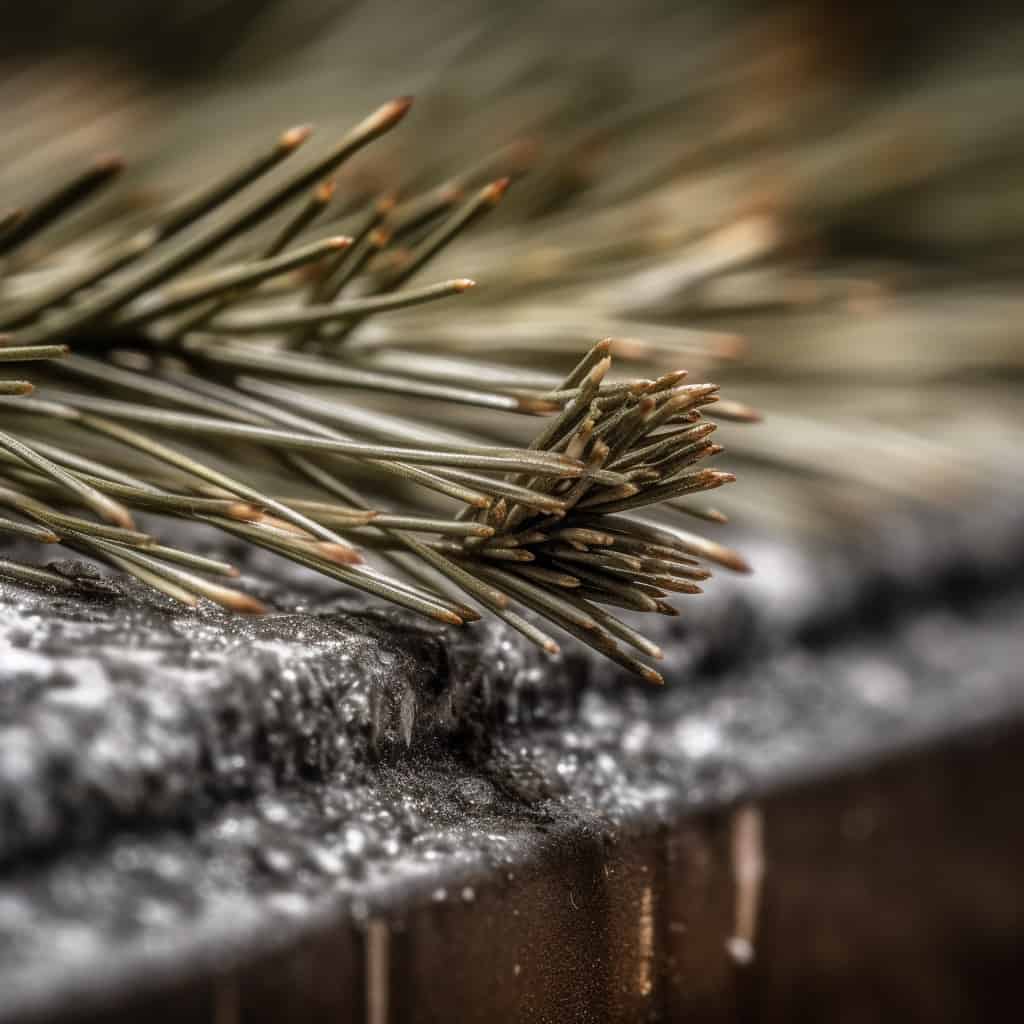
Tradespeople should know the maintenance requirements for each gutter guard product they offer and communicate these expectations to their clients. Choosing a product that fits your client’s lifestyle and maintenance capabilities is essential for overall satisfaction.
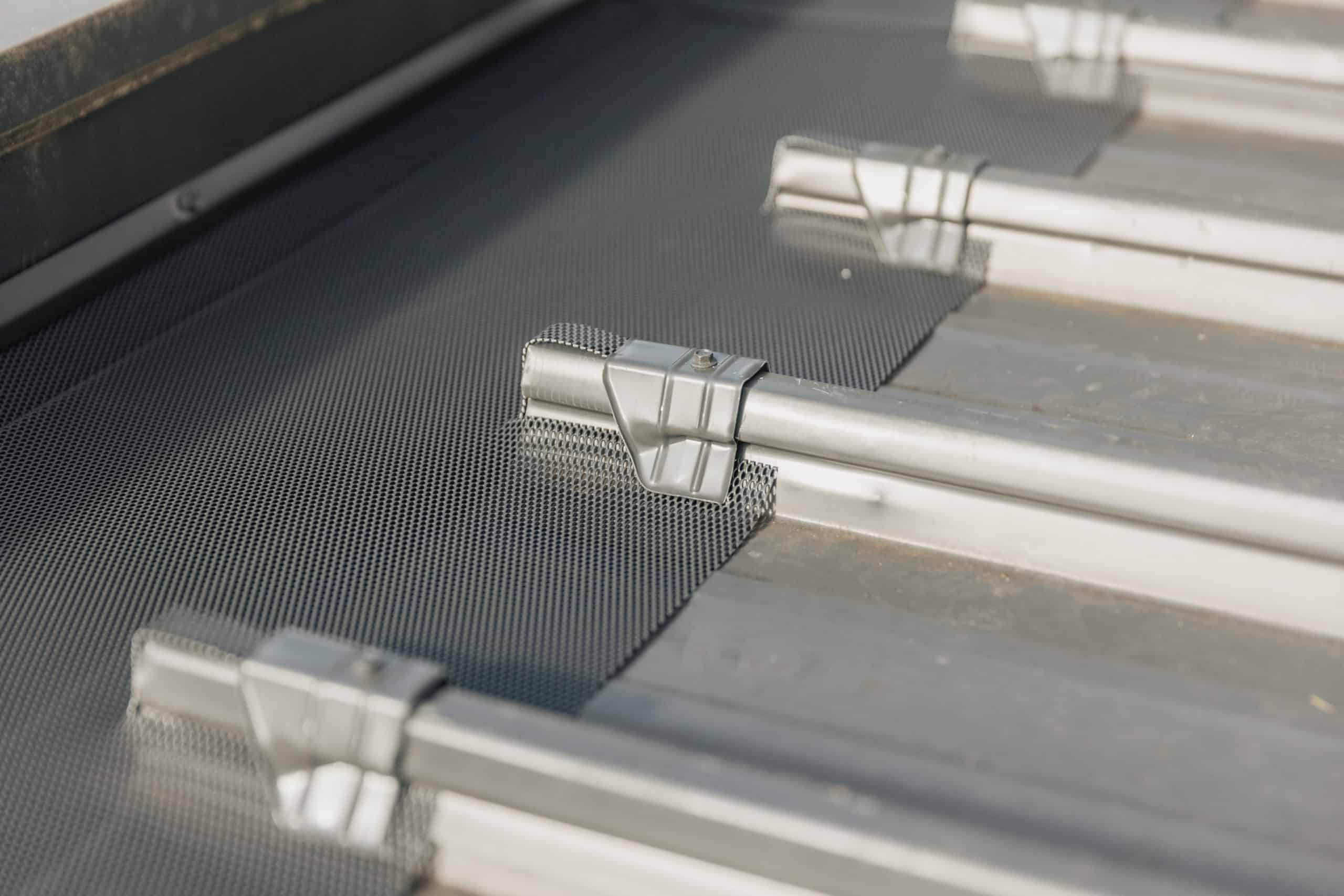
Gutter Cleaning

Before installing gutter guards, installers must thoroughly clean gutters and remove debris build-up in the system, including the valleys and downpipes. Tradespeople should inform their clients of the importance of thorough gutter cleaning before installing gutter guards, whether they choose DIY installation or professional services. This preparation is crucial to prevent clogged gutters underneath the guard, leading to replacement and ineffectiveness of the gutter guard.

By considering these factors and choosing the right gutter guard products for various Australian conditions, tradespeople and roofing companies can ensure their clients’ homes and commercial properties are protected and secure in any environment.

Need gutter guard installed?

Gutter Protection Against Other Australian Trees

Other finer debris tree types that require gutter guard installation to protect the gutters include: 

  • Eucalyptus trees: (ACT, NSW, NT, QLD, SA, TAS, VIC, WA)Many eucalyptus trees shed delicate leaves and bark, which can accumulate in gutters. Eucalyptus trees can also drop large debris, like branches.
  • Elm trees: (VIC, NSW, SA, TAS, VIC) Elm trees are deciduous and shed fine leaves in the autumn that can accumulate in gutters.
  • Jacaranda trees: (VIC, NSW) These trees are known for their beautiful purple flowers, but they can also shed small leaves and flowers that can clog gutters.
  • Maple trees: (VIC, NSW, SA, TAS, QLD, WA) Maple trees are deciduous and shed fine leaves in the autumn that can accumulate in gutters.
  • Plane trees: (VIC) Plane trees are deciduous and shed fine leaves and bark that can accumulate in gutters.
  • Silver birch trees: (VIC, SA, TAS NSW) Silver birch trees are deciduous and shed fine leaves in the autumn that can accumulate in gutters.
  • Sweet gum trees: (ACT, NSW, NT, QLD, SA, TAS, VIC, WA) Sweet gum trees are deciduous and shed fine leaves in the autumn that can accumulate in gutters.
  • Wattle trees: (NSW, VIC) Wattle trees, native to Australia, can shed fine leaves, flowers, and debris that can accumulate in gutters.
  • Bottlebrush trees: (NSW, QLD) These Australian natives are known for their distinctive brush-like flowers. They shed fine leaves, flowers, and debris that can accumulate in gutters.
  • Melaleuca trees: (SA, WA) Melaleuca trees, also known as paperbarks or tea trees, shed fine leaves, flowers, and bark that can accumulate in gutters.
  • Angophora trees: (NSW) Angophora trees, related to eucalyptus trees, can shed fine leaves, flowers, and bark that can accumulate in gutters.
  • Blackbutt trees: (NSW, QLD) Blackbutt trees are native Australian eucalyptus trees that shed fine leaves, flowers, and bark that can accumulate in gutters.
  • Swamp Mahogany Trees: (NSW, QLD) Swamp mahogany trees, a type of eucalyptus, shed fine leaves, flowers, and bark that can accumulate in gutters.
  • Illawarra flame trees: (NSW, QLD) These trees are known for their stunning red flowers, but they can also shed fine leaves and flowers that can clog gutters.

By considering the types of trees and vegetation in various Australian regions, tradespeople and roofing companies can choose appropriate gutter guard products to protect homes and commercial properties from debris accumulation.

Need gutter guard installed?

Need help to select the best gutter guard for pine needles?

The small hole size specifications of ember guards make them ideal for gutter protection against pine needles. Their effectiveness in preventing debris accumulation, allowing efficient water flow, and providing additional protection against fire hazards, makes them a valuable investment for homeowners and commercial properties. Other gutter guard types do not offer the comprehensive protection needed. 

Screen Tech has over 20 years in the gutter protection industry, with extensive knowledge of the gutter guard installation process, roofing and building management for your gutter guard job. We have an extensive range of aluminium, poly and steel mesh products that can fit any gutter. We supply roofing companies and gutter guard installers across Australia with affordable delivery options.

Use our gutter guard estimation services to quote your next gutter guard project, or call our expert team for advice and assistance on the installation process. 

Integrated mesh guards can come in various materials, such as ScreenTech’s GutterMesh and TuffMesh® ranges, including aluminium, Colorbond® steel, and poly. Each range includes

ScreenTech’s TuffMesh® range is the best commercial-grade gutter guard in Australia. It is only available for professional installation and not as a DIY option.

Categories
Blog

A Comprehensive Guide to Plastic Mesh Gutter Guard

Gutters protect your home from water damage by channelling rainwater away from the foundation. However, gutters can become clogged with leaves, twigs, and other debris, leading to overflow and costly damages. To help prevent these issues, plastic gutter guard mesh can be an effective solution.


This article provides an in-depth look at the advantages and disadvantages of poly gutter mesh, helping you make an informed decision for your home.

How Does Plastic Gutter Guard Mesh Work?

Plastic mesh gutter guards are designed with small holes that allow maximum water flow while preventing leaves and debris from entering the gutter. The gutter mesh is typically made from polyethylene or PVC, which is durable, UV stabilised, and resistant to other elements. By covering the gutters with this gutter mesh, homeowners can enjoy a more efficient gutter system that requires less frequent cleaning and maintenance.

Need gutter guard installed?

Plastic Gutter Guard Mesh Pros and Cons

Advantages

  • Durability and strength
  • UV resistance 
  • Available in various Colorbond® colours
  • Ease of installation
  • Suitable for coastal applications
  • Suitable for galvanised applications

Disadvantages

  • Cost-effectiveness
  • Susceptibility to sagging
  • UV degradation over time
  • Unsuitable as ember mesh
  • Unsuitable for potable water use
  • Limited suitability for climates

Table: Advantages and Disadvantages of Plastic Gutter Guard Mesh

tuff mesh gutter guard

Advantages of Poly Mesh

Durability & Strength

Poly mesh gutter guards are made from high-quality plastic materials with exceptional durability and strength. This allows the guards to withstand harsh weather conditions, heavy rain, and the weight of accumulated debris without breaking or tearing.

UV Stabilised

Poly mesh is designed to resist the harmful effects of the sun’s ultraviolet (UV) radiation. The gutter mesh’s UV stabilised feature maintains its structural integrity and colour over time, making it a long-lasting solution for gutter protection.

Ease of Installation

One of the most significant advantages of poly mesh gutter guards is their ease of installation. Most homeowners can install them with basic tools and without professional assistance. They are typically laid over the existing gutters and secured with clips or fasteners, making the installation process quick and straightforward.

Cost-Effectiveness

Poly mesh gutter guards are relatively affordable compared to other gutter protection options. Their lower cost makes them an attractive choice for homeowners on a budget who still want to protect their gutters from debris and clogs effectively.

Coastal Applications

Poly mesh gutter guards are an excellent choice for homes in coastal areas. The materials used in their construction are resistant to corrosion caused by salt and moisture, making them ideal for use in environments with high salt air and humidity levels.

Galvanised applications

Poly mesh gutter guards are also suitable for use with galvanised gutters. Their compatibility with galvanised materials ensures they won’t cause any adverse reactions, such as corrosion or rust, that could compromise the gutter system’s integrity.

Effective Bird-Proofing Measure

Poly mesh is a practical bird-proofing solution due to its durable construction and tight mesh pattern, which creates a physical barrier against nesting or roosting birds. Its UV-resistant properties ensure long-lasting protection with minimal maintenance. Consequently, a poly mesh suits homeowners seeking to safeguard their properties from bird-related damage and nuisances.

Need gutter guards installed 

Limitations of Poly Mesh

mesh panel

Susceptibility to Sagging Or Collapsing

Despite their durability, poly mesh gutter guards can be susceptible to sagging or collapsing under the weight of heavy debris. If not addressed promptly, this can result in the mesh becoming ineffective at preventing debris from entering the gutters and causing clogs.

UV Degradation Over Time

Although poly mesh gutter guards are designed to resist UV radiation, they can still experience some degradation over time. Extended exposure to sunlight can cause the mesh to become brittle and prone to cracking or tearing, which may compromise its effectiveness.

Unsuitable For Certain Climates

Poly mesh gutter guards may not be the best choice for all climates. In areas with heavy snowfall or ice, the mesh can become overwhelmed, allowing ice dams to form. Additionally, in regions with intense storms or high winds, the mesh may not be as effective at keeping debris out of the gutters. Homeowners in these climates should carefully consider their specific weather conditions when deciding if poly mesh gutter guards are the best solution for their homes.

Unsuitable for Potable Water Use

Plastic mesh gutter guard is unsuitable for water tanks with potable water use due to the potential release of chemicals from the plastic materials over time. These chemicals can leach into the collected rainwater, making it unsafe for consumption. As a result, plastic mesh gutter guards do not meet the requirements of the Australian Standard AS4020, which sets the criteria for products in contact with drinking water to ensure water quality and safety.

Unsuitable as Ember Mesh

Plastic mesh is unsuitable as ember mesh because it lacks the heat resistance to withstand high temperatures associated with bushfires. When exposed to extreme heat, the plastic mesh can melt or burn, rendering it ineffective at protecting against the entry of embers into gutters or roof spaces. Instead, metal ember mesh made of aluminium, steel or bronze is highly recommended for its superior heat resistance and effectiveness in preventing ember intrusion during fire events.

Need gutter guard installed?

Poly Mesh Gutter Guard Products

See ScreenTech’s Gutter Ranges 

Other Plastic Gutter Guard Products

brush gutter guard

Several alternative plastic gutter guard options are available, each with advantages and disadvantages. 

Some of these alternatives include: 

  • Solid plastic covers
  • Solid plastic screens 
  • Plastic brush gutter guards
  • Foam gutter guards 

Solid plastic covers, brush gutter guards, and foam gutter guards offer unique benefits as gutter protection solutions. Solid plastic covers and screens allow water to permeate the cover and into the gutter through a narrow opening, while brush guards use stiff bristles to prevent debris from entering the gutters. 

On the other hand, Foam gutter guards fit snugly inside the gutter and allow water to pass through while blocking debris. However, these options can have limitations, such as reduced water flow, difficulty in cleaning, and the potential for trapping debris. 

Polyethylene gutter mesh is a more durable and comprehensive plastic gutter guard solution. Its design efficiently filters out debris while maintaining optimal water flow. Polyethylene mesh offers superior durability and UV resistance, ensuring long-lasting performance and low maintenance requirements compared to other plastic gutter guard alternatives.

When evaluating these options, it’s crucial to consider cost, ease of installation, maintenance requirements, and effectiveness in your specific environment.

Is Plastic Gutter Guard Mesh Worth It?

To determine if plastic gutter guard mesh is the right choice for your home, consider the specific needs of your property and weigh the pros and cons of using poly mesh. For some homeowners, the advantages of poly mesh gutter guards, such as their durability, cost-effectiveness, and ease of installation, outweigh the potential limitations.


However, alternative gutter protection options may be more suitable for others with specific environmental concerns or a higher frequency of smaller debris. It’s essential to carefully assess your home’s gutter protection needs and research various options to make the best decision for your property.

Ultimately, choosing the right gutter protection solution is crucial for maintaining the integrity and functionality of your gutter system. By understanding the advantages and disadvantages of poly mesh gutter guards, you can decide whether they are the best choice for your home.

If you’re looking for high-quality poly mesh gutter guards, consider ScreenTech’s Tuffmesh Poly Mesh, a commercial-grade poly gutter mesh, or GutterMesh Poly, which has proven effective on Australian roofs and gutter systems for over 20 years.
Regardless of your option, remember that regular gutter maintenance and inspection are still necessary to ensure your gutter system’s longevity and effectiveness. Give your home the protection it deserves with ScreenTech’s reliable gutter guard solutions.

Screen Tech has over 20 years in the gutter protection industry, with extensive knowledge of gutter guard installation, roofing and building management for your gutter guard job. We have an extensive range of aluminium, poly and steel mesh products that can fit any Stratco gutter. We supply roofing companies and gutter guard installers across Australia with affordable delivery options.

Use our gutter guard estimation services to quote your next project, or call our expert team for advice and assistance for your gutter guard job.